
Secure Your Wind-Lifted Chimney Cap Today Before Active Rain Destroys Your Ceiling
When severe weather strikes St. Louis, our crews deploy directly from our Overland hub to rapidly waterproof and secure compromised chimneys across the county.
As an essential part of our St. Louis 24/7 emergency chimney repair protocol, we operate on a heavily regimented, 2-hour emergency timeline
What to Do When a Storm Tears Open Your Chimney
When severe winds rip the cap or flashing off your chimney, immediate emergency tarping is required. You must isolate the breach to stop active water infiltration before structural rot occurs. Do not climb a wet roof; deploy a rapid-response masonry crew to safely execute storm triage and temporary weatherproofing.
Surviving the High-Velocity Winds of Missouri Spring Storms
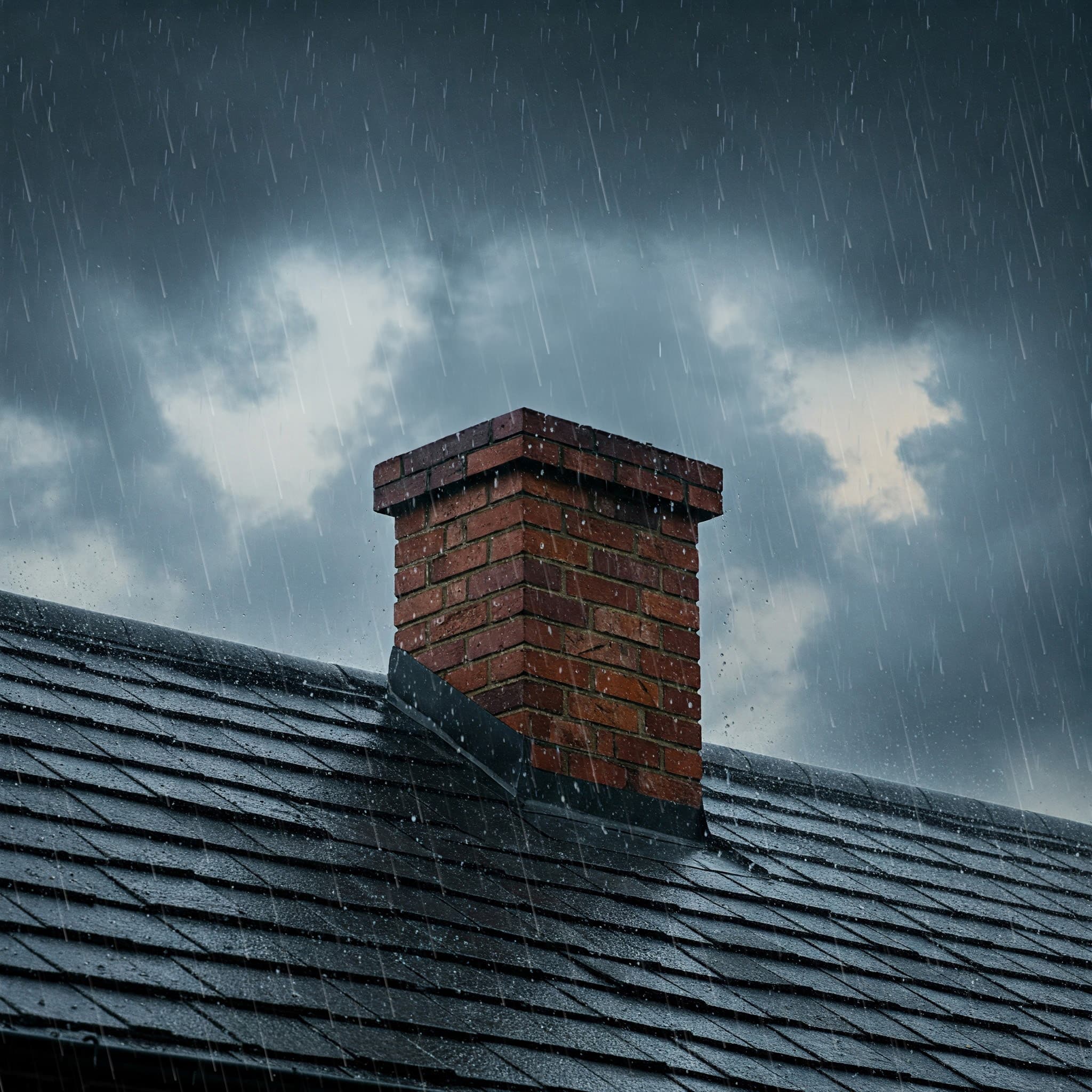
The Greater St. Louis area is infamous for atmospheric violence. When spring storm cells roll across Missouri, they bring high-velocity straight-line winds and aggressive hail that target the highest point of your home the chimney. These extreme weather fronts exert massive uplift pressure on the structural components guarding your flue. A roof that survived years of quiet rainfall can be torn open in minutes when 70-mile-per-hour gusts hit the brickwork. Our Overland dispatch hub understands exactly how these microbursts exploit aging chimney materials. We do not wait for the clouds to clear completely; we mobilize while the damage is fresh to prevent the storm from moving inside your living room.
Why Galvanized Metal Fails in the Midwest
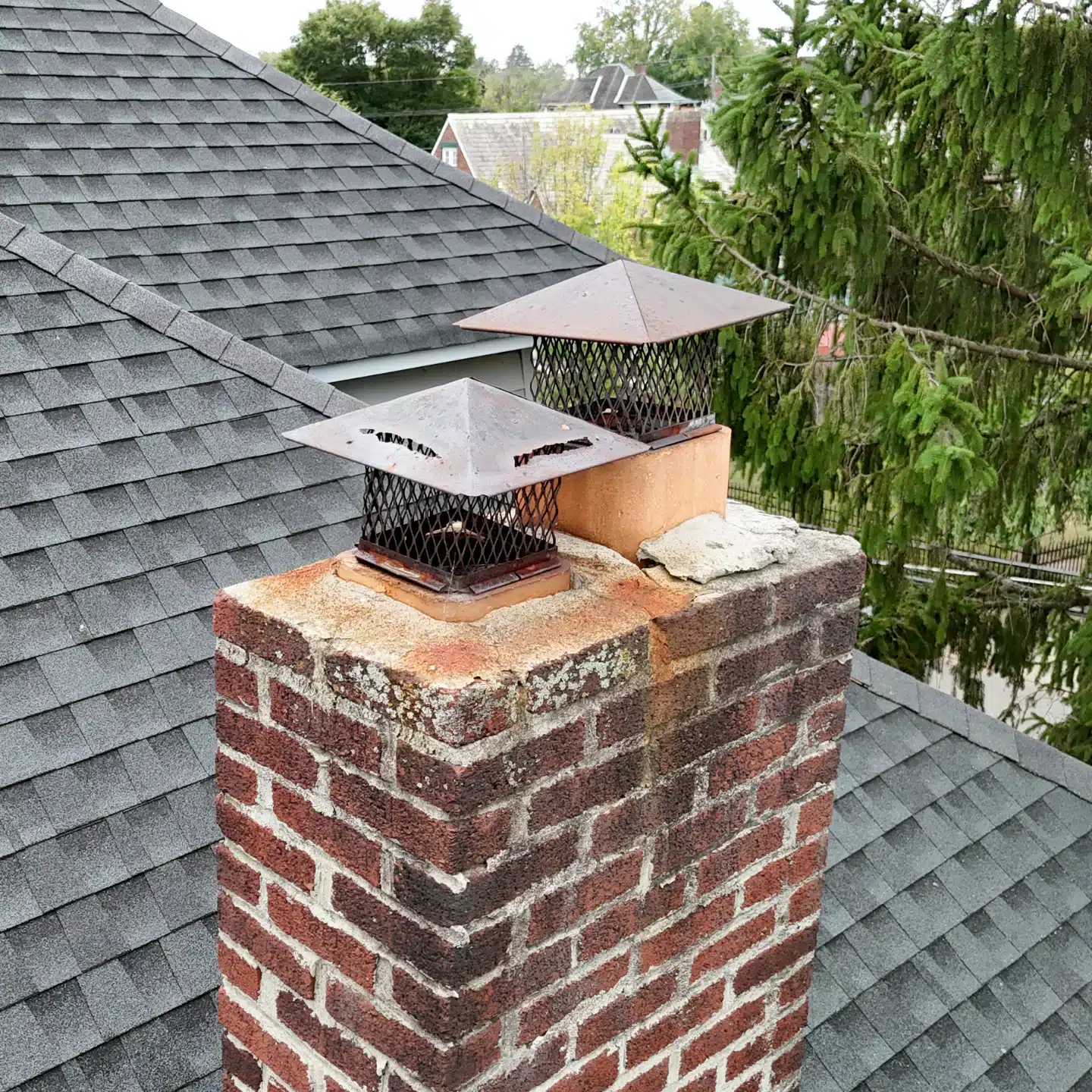
Builders in the St. Louis suburbs frequently used galvanized steel for caps and flashing to save money. Over decades of Midwestern humidity and freeze-thaw cycles, that galvanized coating breaks down, leaving the raw metal exposed to severe rust. When a severe windstorm finally hits, these rusted components lack the structural integrity to hold on. The wind catches the weakened edge of a wind-lifted chimney cap and bends it backward, ripping the anchors straight out of the concrete crown and exposing the open flue to torrential downpours.

Securing a Blown Chimney Cap During a Midnight Downpour
Last May, a massive supercell moved through St. Louis County right around midnight. My phone rang at 1:30 AM. It was a frantic homeowner in Overland; they heard a massive crash on their roof, followed immediately by water pouring straight down their firebox and splashing onto their hardwood floors. I loaded up the emergency truck and arrived on site through blinding rain.
Wearing a high-visibility harness, I got up on the slick roof and found the culprit. The heavy winds had completely sheared off their rusted chimney cap, tossing it into the backyard and leaving a gaping 12-inch hole directly into their home. I deployed heavy-duty canvas, strapped it down tight over the crown, and applied surface-tolerant mastic to the edges. The water infiltration stopped immediately. We dried out the hearth, and a week later, we permanently bolted down a custom stainless-steel cap that will never tear off again.
The Hidden Threat of a Base Flashing Tear Under Your Shingles
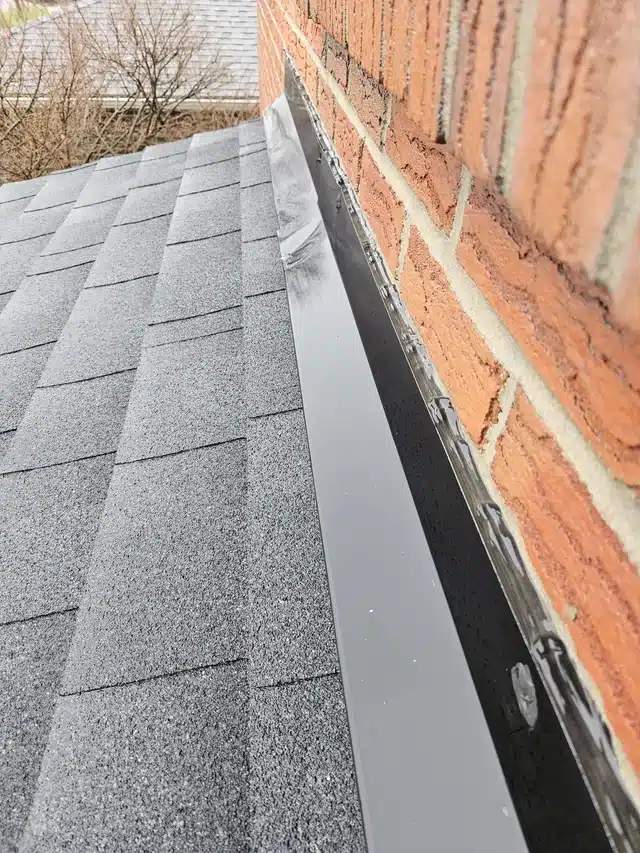
Missing a chimney top is obvious, but the most destructive storm damage is often completely invisible from the driveway. When high winds hit your roof, they aggressively lift and flex your shingles. If the metal flashing connecting your chimney to the roof deck is old or improperly installed, this violent flexing can cause a severe base-flashing tear.
The metal physically rips, creating a hidden void underneath the shingle line. Water infiltration exploits this tear instantly, bypassing the protective layers of your roof and running directly down the wooden trusses in your attic. This hidden moisture soaks your insulation, promotes rapid black mold growth, and eventually rots the structural headers holding up your ceiling. If you ignore a torn flashing seal after a severe storm, the collateral damage to your drywall and framing will cost thousands more than the initial repair.

Why We Trust ChemLink NovaLink FP Over Standard Roofing Tar
When we are executing emergency storm triage on a wet roof, we refuse to use retail-grade black roofing tar or basic silicone caulking. Those cheap materials cannot bond to wet masonry, and they will immediately fail the second the temperature shifts. Instead, we exclusively deploy ChemLink NovaLink FP. This is an industrial-grade, moisture-curing elastomeric flashing sealant engineered specifically for high-stress waterproofing. It is solvent-free, completely waterproofs the damaged seam, and maintains extreme flexibility to accommodate the thermal expansion of the chimney structure.
The Science of Surface-Tolerant Mastics
The chemistry behind NovaLink FP makes it the ultimate emergency defense tool. It is a surface-tolerant mastic, meaning it actually uses the moisture present on the wet bricks to trigger its curing process. When we find a torn step flashing joint during active rain, we can inject this masonry sealant directly into the void. It bonds aggressively to wet concrete, damp wood, and slick metal, creating an immediate, watertight elastomeric seal that stops bleeding while we plan the permanent sheet-metal fabrication.
Executing Emergency Tarping Even if Your Masonry Took a Lightning Strike
Homeowners often hesitate to call us after a severe storm because they assume their chimney is too damaged for a temporary fix. When lightning strikes a chimney, the superheated moisture inside the bricks instantly vaporizes, causing a violent explosion that can blow the entire top half of the masonry across the yard.
Even if your chimney took a direct lightning strike and the structural bricks are shattered, we can still secure the envelope. We do not leave your home exposed. Our technicians will safely remove loose, hanging debris to clear the fall zone, then perform heavy-duty emergency tarping over the entire damaged chase. We strap the protective membrane tightly to the remaining stable structure, completely isolating your attic from incoming rain while you navigate the complex rebuilding process.

Fixing Step Flashing on 1980s Suburban Prefabricated Chimneys

The suburban expansion around Overland in the 1980s relied heavily on prefabricated, wood-framed chimney chases covered in siding, rather than traditional solid masonry. These specific structures are highly vulnerable to high-wind events. The step flashing the interwoven metal L-brackets that step up the side of the chimney along the roofline was often nailed directly into the wood framing without proper counter-flashing. When gale-force winds warp the siding, it pulls the step flashing completely away from the roof deck, leaving a massive channel for rainwater to flood the interior chase.

When water breaches these 1980s prefabricated structures, it immediately attacks the oriented strand board (OSB) and wooden studs inside the chase. We surgically peel back the damaged siding to expose the failed step flashing, extract the rusted nails, and integrate a proper, modern flashing system. We seal the new metal with advanced elastomeric compounds, stopping the hidden wood rot dead in its tracks and preserving the structural integrity of your home’s exterior envelope.
Stopping Wood Rot Dead in Its Tracks
Protecting Your Driveway from Heavy Emergency Tarping Equipment
The chaotic aftermath of a severe storm is stressful enough without a careless contractor destroying your property during the repair. We know homeowners fear service crews throwing heavy wet tarps, rusted metal caps, and shattered bricks directly onto their landscaping or stamped concrete driveways.
We operate with strict logistical discipline. Before we begin the storm triage, we establish a secure drop zone. We lay down impact-resistant plywood decking to protect your driveway from our ladders and heavy equipment. We lower destroyed chimney components via secured ropes rather than blindly tossing them off the roof. When we finish sealing the breach, we sweep the entire perimeter with heavy-duty magnets to catch any stray roofing nails or sharp metal shards, ensuring your driveway is safe for your car tires and your family.
Silencing the Sound of Water Infiltration in Your Attic
There is no sound more anxiety-inducing during a midnight storm than the steady, rhythmic drip-drip-drip echoing from the ceiling above your bed. That hollow splashing sound means the storm has breached your defenses, and water is actively pooling on the backside of your drywall. You can smell the sharp, damp odor of wet fiberglass insulation turning to mush in the attic.
We eliminate that nightmare. The moment we secure the heavy canvas tarp and lock down the torn flashing, the dripping stops. We replace the terrifying sound of water infiltration with the solid, reassuring silence of a completely waterproofed roofline, allowing you to finally sleep through the rest of the storm.
Our Guaranteed 2-Hour Storm Damage Response Timeline
When water is destroying your interior, you need absolute certainty regarding arrival times. We operate on a heavily regimented, 2-hour emergency storm damage timeline.

You call our dispatch center. We log your address and immediately deploy a technician from our Overland facility.

Our truck arrives at your property. We perform an immediate ground-level safety assessment to avoid live power lines and map the quickest route to the chimney.

We ascend the roof with safety harnesses and physically cover the breach, executing emergency tarping and applying surface-tolerant masonry sealant to stop the active water ingress.

The perimeter is secure. We complete a thermal moisture scan of your interior ceiling to track where the water migrated, clean up all debris, and hand you the forensic damage report.
The 3-Step Protocol for Permanent Weatherproofing
We transition you smoothly from a state of panic to permanent, structural security through our three-step weatherproofing protocol.
We stop the bleeding. We deploy heavy-duty canvas, structural tension bands, and elastomeric compounds to immediately seal the torn flashing and cap blowouts against the ongoing rain.
Once the storm passes and the roof is dry, we return to rip out the temporary patches. We take exact structural measurements and custom-bend heavy-gauge sheet metal to seamlessly match the specific pitch of your roof and the footprint of your chimney.
We install the permanent flashing system, mechanically fastening the metal and integrating it flawlessly under the surrounding shingles. We bolt down a new, heavy-duty chimney cap, leaving the structure stronger and more wind-resistant than it was before the storm.
Transparent Emergency Triage Fees Without "Surge Pricing"
Unethical storm-chasing contractors notoriously use “surge pricing” after a severe weather event, suddenly tripling their rates because they know you are desperate to stop a leak. We despise this predatory practice. We maintain our integrity by providing transparent, flat-rate pricing for all emergency storm damage triage, regardless of how many trees fell in the neighborhood that night.
Upfront Quotes Before We Pull the Ladders
When our technician arrives, they assess the severity of the torn flashing and missing cap. We then provide you with a precise, flat-rate quote to complete the emergency tarping and sealant application. There are no hidden hourly labor fees, and we do not hold your roof hostage. You authorize the exact price before we ever pull a ladder off the truck, ensuring you get immediate, professional relief without financial ambushes.

Count on EBS Home Care LLC for Local Overland Storm Recovery

When Midwestern severe weather violently compromises your home’s exterior, you need a local, highly technical team that prioritizes rapid mechanical defense. Out-of-state storm chasers will slap tar on your roof and disappear; standard roofers will put you on a waiting list while your ceiling rots.
EBS Home Care LLC operates right here in Overland, MO. Our crews specialize in the intense physics of chimney mechanics and the precise application of industrial weatherproofing. We are fully equipped to tear out destroyed metal, seal massive masonry breaches, and permanently protect your home from the next supercell. Do not let torn flashing destroy your interior drywall. Call our dispatch center immediately for guaranteed, rapid-response storm triage.
The Hard Truth About Flashing Repair Costs, Insurance, and Water Infiltration
How much does emergency chimney storm damage repair cost in Overland, MO?
The average cost for emergency storm triage and temporary tarping ranges from $150 to $300, while complete custom flashing replacement costs between $800 and $1,500. EBS Home Care LLC provides a strict, flat-rate quote before we ever deploy ladders in the rain. Your final price depends on the severity of the base flashing tear and whether we need to fabricate a new heavy-duty stainless steel cap to replace the blown-off components.
Does my homeowner's insurance cover repairs for a wind-lifted chimney cap?
Yes, most standard Missouri homeowner’s policies cover sudden, accidental damage caused by severe windstorms and hail. However, insurance adjusters will deny your claim if they believe the water infiltration was caused by long-term rust or neglected maintenance. Our technicians provide your insurance carrier with time-stamped photographic evidence of the acute shear marks on the masonry, ensuring your claim for a wind-lifted chimney cap is rapidly approved.
Can I fix a base flashing tear myself with a store-bought tarp?
No, attempting a DIY roof repair during an active St. Louis storm is incredibly dangerous and usually results in further structural damage. A cheap plastic tarp secured with bricks will immediately blow away in 60-mph Midwestern wind gusts, completely reopening the base flashing tear. Professional emergency tarping requires industrial-grade canvas, engineered tension bands, and specific safety harnesses to securely lock the envelope down without destroying your surrounding shingles.
How long does it take to install permanent step flashing after the storm triage?
It takes 1 to 2 days to custom-fabricate and permanently install new step flashing once the weather clears. Our initial 2-hour storm triage strictly focuses on stopping the active leak with surface-tolerant masonry sealant and heavy tarps. Once the roof deck is dry, our Overland sheet metal fabricators return to precisely bend heavy-gauge metal that perfectly matches the pitch of your roof and the footprint of your chimney chase.
What are the signs that my chimney took a direct lightning strike?
The most definitive signs of a lightning strike include shattered brickwork scattered across your driveway, deep vertical fissures running down the masonry, and a completely obliterated chimney crown. Because lightning superheats the moisture trapped inside the brick, it can cause a violent explosion that buckles metal components and instantly compromises the flue liner. If you hear a deafening crack and find debris in your yard, you must schedule immediate structural bracing before a total collapse occurs.
What should I do immediately if a storm causes severe water infiltration in my chimney?
You must immediately shut off the electrical breakers to any outlets near the fireplace and lay heavy drop cloths inside the firebox. Do not attempt to climb onto your wet roof to investigate the leak. Call our 24/7 Overland dispatch hub immediately so our rapid-response crews can safely deploy to your property and stop the water infiltration at the roofline before it destroys your drywall and attic insulation.
What is the difference between ChemLink NovaLink FP masonry sealant and standard silicone?
ChemLink NovaLink FP is a moisture-curing, surface-tolerant elastomeric compound that actually uses water to trigger its bonding process, whereas standard retail silicone requires a bone-dry surface to adhere. If you apply cheap silicone to wet bricks during a rainstorm, it will simply wash away. We exclusively use industrial-grade elastomeric masonry sealant because it instantly bonds to wet concrete and torn metal, stopping leaks dead in their tracks even during an active downpour.
Do I need a St. Louis County permit for emergency chimney tarping?
No, St. Louis County building codes classify emergency weatherproofing and minor flashing repair as exempt ordinary maintenance that does not require a structural permit. However, if the high winds caused severe structural damage requiring us to rebuild the load-bearing brickwork or pour a new concrete crown, a permit becomes mandatory. We ensure all of our permanent sheet metal repairs comply strictly with local municipal wind-uplift codes.