
Restore Your Historic St. Louis Chimney Perfectly Without Using Destructive Portland Cement
Protect your historic property. All of our historical restorations strictly adhere to the Department of the Interior’s Preservation Brief 2 for repointing historic masonry buildings.
As a premier offering in our St. Louis residential chimney repair services, we adhere to a strict historic restoration timeline.
What is Historic Mortar Matching and Tuckpointing?
Historic mortar matching and tuckpointing is the forensic process of extracting deteriorated mortar from older brick chimneys and replacing it with newly mixed mortar that perfectly mimics the original. We analyze the existing material to guarantee the exact color, texture, and compressive strength required to preserve historic masonry restoration.
When a chimney reaches eighty or a hundred years of age, the mortar holding the bricks together begins to turn to sand and wash away. This is not a defect; it is the natural lifecycle of traditional masonry. However, replacing that mortar is an exact science. You cannot apply modern building materials to century-old brickwork without causing catastrophic structural damage. True historic tuckpointing involves a chemical understanding of the structure, ensuring that the new mortar bonds perfectly with the antique clay while allowing the chimney to manage moisture effectively.


Protecting the Pre-1940s Architectural Heritage of St. Louis
St. Louis winters are relentless on historic masonry. The intense freeze-thaw cycles, where heavy, driving rain is immediately followed by a plunging deep freeze, wreak absolute havoc on the brickwork of century-old homes. The architecture in our region, specifically the pre-1940s properties scattered throughout the county, was constructed using naturally fired clay bricks and softer mortars designed specifically to expand, contract, and breathe with these extreme weather shifts.
When you expose these older structures to modern environmental stress without proper maintenance, the mortar joints inevitably sacrifice themselves to protect the surrounding brick. The mortar is designed to take the brunt of the weather damage, so the brick does not have to. This is intentional engineering, but it requires diligent historic masonry restoration to replace the mortar that was sacrificed before total structural failure occurs.
Why Overland Brickwork Requires Specialized Preservation
Overland and the surrounding municipalities are home to a beautiful array of historic buildings. The brickwork on these homes is fundamentally different from the kiln-fired bricks manufactured today. Modern bricks are incredibly hard, dense, and uniform, while the antique bricks in our neighborhoods are softer, highly porous, and structurally delicate. If you apply the wrong repair techniques or the wrong chemicals to these older, porous bricks, you destroy the primary defense mechanism of the entire chimney structure.
Saving a 1920s Chimney from Irreversible Brick Spalling
Last fall, I drove out to a beautiful 1920s Craftsman off Midland Boulevard. The homeowner was absolutely devastated. Two years prior, they had hired a general contractor to fix some crumbling mortar on their chimney. Now, the actual faces of the original bricks were violently popping off and shattering on their driveway. I set up my ladder, secured the perimeter, and took a close look at the joints. The previous contractor had taken a massive shortcut, slathering the chimney in modern Portland cement.
This rigid cement was so incredibly hard that when the winter moisture penetrated the bricks, froze, and expanded, the cement refused to budge. Instead of the mortar absorbing the pressure, it forced the expanding ice directly outward into the softer, antique brick, literally blowing the face off the structure. This is a devastating process known as brick spalling. We had to spend three days painstakingly grinding out the improper cement with diamond blades, being incredibly careful not to further damage the delicate brick. Once cleared, we installed a custom-blended, highly breathable lime-based mortar. We saved the chimney from a total teardown, but it was a dangerously close call.
The Hidden Danger of Trapped Moisture in Antique Masonry
The greatest threat to an antique chimney is not wind, age, or shifting foundations; it is trapped water. Historic masonry was engineered from the ground up as a permeable system. It naturally absorbs rainwater during a heavy Missouri downpour, but crucially, it relies entirely on the mortar joints to act as an evaporation pathway to dry out when the sun returns. When an uneducated mason seals those joints with non-permeable modern materials, they completely eliminate the chimney’s ability to breathe.
This trapped moisture has nowhere to go, so it pools behind the brick face. As it sits in the dark, it begins to rot the structural wooden headers tying the chimney to the house framing. You won’t see this happening from the street. By the time you notice severe interior water stains on your ceiling or structural leaning from the driveway, the damage is already catastrophic. Proper tuckpointing ensures that the water vapor can freely escape the masonry, neutralizing this invisible, highly destructive threat.
Why We Use Acid Digestion Tests Instead of Eyeballing Color
Most local masonry companies try to match historic mortar by simply staring at it, throwing different bags of sand and dye into a mixer, and slapping it on the wall until it looks somewhat close. We reject this amateur “guess-and-check” methodology entirely. A visual match is not a chemical match. To achieve a flawless restoration, we perform laboratory-grade acid digestion tests on samples extracted directly from your existing joints.
We take the original mortar back to our shop and dissolve the binder using a precise, highly controlled acid solution. This strips away everything except the original aggregate sand. This forensic analysis reveals the exact grain size, the specific color composition, and the precise ratio of the original materials used nearly a century ago.
Formulating the Perfect Lime-Based Mortar
Armed with the hard data from the acid digestion test, we source locally quarried sand that mirrors the exact profile of the original aggregate. We then formulate a custom lime-based mortar. We do not use off-the-shelf, pre-mixed bags from the hardware store. We rely on pure Type O or Type K lime putty mixes that guarantee the exact identical chemical makeup of the mortar your home was originally built with.
Restoring Your Chimney Even If Portland Cement Was Already Applied
A frequent fear among owners of historic homes is that a previous, botched repair has permanently ruined their chimney. They look up and see thick, gray, mismatched smears of concrete dominating their beautiful red brick, assuming the only remedy is a massive demolition and rebuild. Even if Portland cement was aggressively applied to your chimney by a prior contractor, we can still execute a rescue operation.
Our technicians are highly trained in historic remediation. We use specialized, low-impact masonry tools to carefully detach and remove the destructive rigid cement. We take the necessary time to clean the brick edges without scoring, chipping, or fracturing the antique clay. Once the incompatible material is completely extracted, we restore the structural integrity and the original aesthetic with the correct lime-based mortar, bringing your chimney back from the brink of destruction.
Preserving the Aesthetic of Historic Victorian and Craftsman Homes

St. Louis is famous for its intricate Victorian, Craftsman, and Second Empire architecture. The distinct charm and massive curb appeal of these homes rely heavily on the specific tooling, color, and texture of the original masonry joints. Whether your home features a grapevine joint, a struck joint, or a classic flush joint, a sloppy, generic tuckpointing job will immediately ruin the aesthetic and downgrade the property’s historic value. We do not just slap mud on the wall; we meticulously recreate the specific architectural tooling of the era, ensuring the new joints blend invisibly with the weathered masonry.

Beyond the visual aesthetic, the physics of the restoration are paramount. We explicitly calibrate the mortar compression strength of our custom mixes to remain safely below the density of your specific brick era. We utilize softer, high-lime mixes, often engineered specifically for the 350 PSI range, that provide maximum structural flexibility. This allows the historic structure to naturally shift, settle, and expand with thermal changes without causing structural shear fractures down the wall.
The Critical Role of Mortar Compression Strength
Surgical Joint Raking Without Blanketing Your Yard in Dust
The process of removing decayed mortar, known in the trade as joint raking, is inherently messy. If handled by an amateur with an unshielded grinder, it produces a massive, suffocating cloud of hazardous silica dust that coats your driveway, kills your landscaping, and infiltrates your home’s HVAC system. Homeowners are right to be anxious about the collateral damage and mess of heavy masonry work.
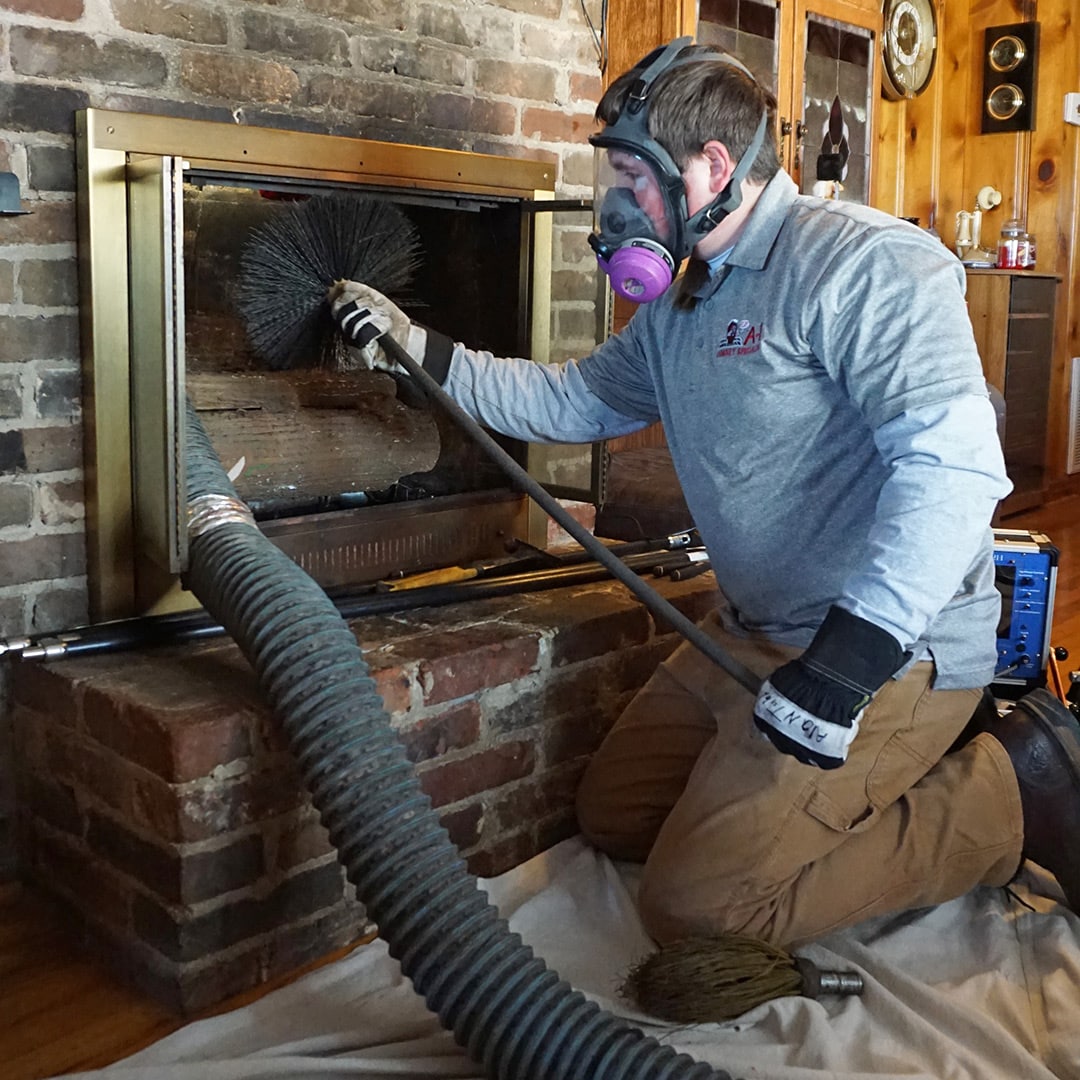
We operate under a militant cleanliness protocol. Our technicians perform joint raking using specialized diamond-blade angle grinders equipped with localized dust-extraction shrouds. These protective shrouds are connected to heavy-duty H-Class HEPA vacuums that aggressively capture 99% of airborne silica dust at the source. We protect your Overland property, keeping your yard pristine and your family’s breathable air completely free of toxic masonry dust while we grind.
The Cracking Sound That Warns of Imminent Masonry Failure
Masonry failure on a historic home rarely happens completely silently; the structure usually gives you an audible warning. During a deep Missouri winter freeze, you might be sitting in your living room and hear a sharp, distinct “pop” or a deep, grinding crunch echoing down the chimney flue. That is the unmistakable sound of hydrostatic pressure physically fracturing your load-bearing brickwork.
You may also hear the gritty, constant trickle of sand falling down the chimney and hitting the metal throat damper below. This is the sound of your original lime-based mortar literally dissolving into dust and falling out of the joints. These sensory details are massive red flags. If you hear your chimney cracking or raining sand, the internal structural bonds have failed entirely, and you need immediate forensic tuckpointing before gravity takes over and pulls the chimney off your roof.
The Detailed Timeline for Forensic Masonry Restoration
Restoring a century-old chimney requires intense precision, not speed. We do not rush historic preservation, and we do not cut corners to finish early. We provide a highly structured, predictable timeline so you know exactly what to expect from our crews.
We erect heavy-duty safety scaffolding to protect your roofline, establish HEPA-vacuum dust containment protocols, and carefully extract initial mortar samples for acid digestion testing. We also begin surgical joint raking to remove deteriorated material.

While the lab finalizes the custom mortar formulation, our technicians complete the joint extraction, wash the masonry to remove all ambient dust, and prepare the brick faces for maximum adhesion.

We custom-blend the lime-based mortar on site. Our master masons carefully pack the new mortar into the joints in stages, tooling the finish to perfectly match the 1920s aesthetic. We then break down the scaffolding and clean the site entirely, leaving your chimney structurally sound and visually flawless.
Our 3-Step Process for Flawless Historic Tuckpointing
We eliminate the anxiety of masonry repair by following a highly disciplined, three-step forensic protocol that guarantees a perfect match and a permanent fix.
We surgically remove the failed metal and the compromised wooden framing underneath. We do not hide water damage; we expose it, extract the decayed OSB, and rebuild the load-bearing supports so your new cover sits on a perfectly solid foundation.
We treat any remaining adjacent lumber with specialized antimicrobial agents to kill dormant mold spores, completely neutralizing the damp, musty odors associated with waterlogged framing.
We bolt down the custom, cross-broken stainless steel chase cover. The engineered slopes shed water instantly, while the rust-proof alloy guarantees you will never see another orange stain on your siding.
Upfront Pricing for Laboratory-Grade Mortar Analysis
The highly specialized nature of historic masonry often invites unethical contractors to arbitrarily inflate their prices, claiming “old houses just cost more to fix.” We completely reject that lack of transparency. We operate on a strict, upfront flat-rate pricing model for all of our tuckpointing and restoration services. You will receive a highly detailed, line-itemized quote breaking down the exact cost of the scaffolding, the surgical joint raking, the laboratory-grade mortar analysis, and the final installation before we ever touch a brick. There are no hourly surprises and no hidden historical upcharges.
Free Second Opinions on Botched Masonry Work
If another contractor has told you that your historic chimney is too far gone and needs to be completely demolished, or if you suspect someone just slathered cheap Portland cement over your antique bricks, we offer comprehensive second opinions. We will evaluate the chimney’s structural health and provide an honest, data-driven assessment of whether the structure can be saved through proper forensic tuckpointing.

Trust EBS Home Care LLC to Preserve Your Overland Property
When the mortar on your pre-1940s home begins to fail, you cannot trust the repair to a generalist with a bag of modern concrete. You need a highly specialized team of master masons who understand the delicate chemistry of antique brickwork and the severe environmental pressures of the Greater St. Louis area.
Located on O’Connell Ave in Overland, our masonry restoration teams are perfectly positioned to preserve the architectural heritage of homes across the entire St. Louis region. We utilize laboratory-grade testing, historically accurate materials, and surgical precision to permanently secure your chimney against the elements. Do not let improper, modern repairs destroy your home’s historic value or structural integrity. Contact our dispatch center today to schedule a forensic mortar analysis and flawless tuckpointing restoration.
Historic Masonry : The Hard Truth About Tuckpointing Costs, Acid Digestion Tests, and Portland Cement
How much does historic chimney tuckpointing cost in Overland, MO?
The average cost for historic chimney tuckpointing in Overland ranges from $1,500 to $4,500, depending heavily on the square footage of the surgical joint raking required. We charge a strict, upfront flat-rate fee for the laboratory-grade acid digestion test to determine your masonry’s exact original aggregate ratio. Investing in this specialized mortar matching prevents the need for a catastrophic $15,000 structural teardown caused by the application of destructive Portland cement.
Can I fix crumbling mortar myself with a store-bought lime mix?
No, applying a pre-mixed, retail lime mortar to your 1920s St. Louis home will almost certainly result in an incorrect compression strength and a mismatched aesthetic. Historic masonry restoration requires a highly precise chemical formulation, typically a custom-blended Type O or Type K lime putty, based on forensic analysis of the original binders. Without mathematically matching the exact vapor permeability of your antique clay bricks, a DIY patch will trap moisture and trigger aggressive brick spalling during the next freeze.
What is the difference between standard repointing and historic tuckpointing?
Standard repointing simply involves packing basic mortar into deteriorated joints to stop leaks, whereas historic tuckpointing meticulously recreates the original architectural aesthetic and chemical composition of the masonry. During forensic tuckpointing, our master masons utilize specialized diamond-blade angle grinders to extract the decayed material before applying a custom-blended lime-based mortar. We then precisely tool the new joints to mimic the exact Victorian or Craftsman profiling of your century-old chimney.
What are the specific St. Louis County building codes for historic masonry restoration?
Minor cosmetic tuckpointing and mortar replacement do not typically require a structural building permit under the standard St. Louis County residential code exemptions. However, if the restoration involves replacing load-bearing antique bricks or rebuilding a collapsed firebox, strict municipal code adherence is mandatory. We guarantee that all our exterior masonry work strictly follows the Department of the Interior’s Preservation Brief 2 guidelines for heritage structures.
Does my homeowner's insurance cover repairs for botched Portland cement applications?
No, standard Missouri homeowner’s insurance policies classify damage caused by a previous contractor’s improper use of high-strength Portland cement as faulty workmanship or a preventable maintenance issue. Insurance adjusters typically only approve payouts for sudden, accidental perils like a lightning strike or extreme wind uplift. However, if your brick spalling was accelerated by a documented severe storm, our technicians can provide the forensic structural assessment needed to support a partial claim.
How long does the laboratory-grade acid digestion test take?
A laboratory-grade acid digestion test takes exactly 24 to 48 hours to yield precise chemical composition results. While the lab safely dissolves the binders to isolate and measure the original aggregate sand, our Overland-based crews establish HEPA vacuum containment and begin the surgical joint raking process on your property. The entire historic restoration, from initial mortar extraction to the final architectural installation, is generally completed within 3 to 4 days.
What are the signs that my 1920s chimney needs historic mortar matching immediately?
The most urgent sign of impending structural failure is the audible sound of sandy mortar trickling down your chimney flue and hitting the metal throat damper. You will also notice the physical faces of your antique bricks popping off onto your lawn and thick, powdery white efflorescence stains streaking down the exterior. These symptoms prove that hydrostatic pressure has overwhelmed the original lime-based mortar, requiring immediate forensic extraction.
Will historic tuckpointing be loud or noisy for my neighbors?
Yes, the initial joint raking phase of historic tuckpointing produces significant, high-decibel grinding noise for the first 1 to 2 days of the project. To mitigate disruption and environmental hazards, we utilize specialized hand-held angle grinders equipped with localized dust-extraction shrouds. These shrouds are directly connected to industrial H-Class HEPA vacuums, trapping 99.97% of the carcinogenic silica dust before it can blanket your Overland landscaping or cross into your neighbor’s yard.