
Stabilize Your Leaning Chimney Immediately Without Waiting for a Total Structural Collapse
Based directly out of our O’Connell Ave headquarters, we quickly dispatch heavy masonry-stabilization crews to at-risk properties throughout Overland.
As a critical part of our St. Louis 24/7 emergency chimney repair protocol, we deploy immediately to secure your property.
What to Do When Your Chimney Bricks Start Falling
If your chimney is shedding bricks or actively leaning, you are facing imminent structural failure. Immediately clear the fall zone around the exterior, avoid using the fireplace, and dispatch an emergency masonry crew to install structural bracing and stabilize the load-bearing masonry before a total roof collapse occurs.


How Missouri’s Freeze-Thaw Cycle Destroys Masonry
St. Louis area weather is brutal on exterior brickwork. We regularly experience extreme weather whiplash, where a wet, humid afternoon is immediately followed by a plunging cold front that drops the temperature below freezing overnight. This rapid fluctuation is the primary catalyst for sudden, catastrophic masonry failure. When older, porous bricks absorb heavy rainfall, that trapped moisture violently expands by 9% the moment it freezes. This extreme hydrostatic expansion physically blows the face off the bricks and blasts the mortar out of the joints, a process known as brick spalling.
When that frozen moisture thaws the next morning, it leaves behind massive voids, rendering the structure completely unstable. You cannot treat a St. Louis chimney the same way you would a chimney in Arizona. It requires specialized defense mechanisms designed specifically to combat this aggressive Midwestern freeze-thaw cycle.
Dispatching from O’Connell Ave Before the Next Storm
Operating directly out of our headquarters on O’Connell Ave in Overland gives us a massive logistical advantage. When a severe winter storm exposes a failing chimney, we utilize the local transit corridors to deploy our stabilization crews rapidly, securing your property before the next freeze accelerates the damage.
Stopping a Chimney Collapse in Overland
Early last spring, we received an urgent call from a homeowner just a few blocks away. They had noticed a few pieces of brick on their patio the week before, but after a heavy weekend rainstorm, they woke up to find their entire chimney visibly pulling away from the siding. The structural lean was severe, with a full three inches of separation at the roofline.
I dispatched our heavy masonry unit immediately. When we arrived, the entire base was compromised due to advanced mortar joint failure. The homeowner was terrified that the thousands of pounds of brick were going to crash through their roof and into their kitchen. We did not waste time talking; we immediately erected heavy-duty steel safety scaffolding and applied rigid structural bracing to the exterior chase, physically locking the chimney to the home’s framing. We neutralized the collapse risk within an hour, buying us the time needed to safely extract the destroyed bricks and rebuild the base without risking the homeowner’s property.


The Hidden Danger of Mortar Joint Failure
The most dangerous part of a crumbling chimney is not the missing brick faces you can see from the driveway; it is the deep mortar joint failure you cannot see. Mortar acts as the structural glue holding the entire system together. When hydrostatic expansion crushes the outer layer of mortar, water begins pooling deep inside the load-bearing masonry.
This trapped water rots the internal structure from the inside out. As the mortar turns to sand, the massive weight of the chimney shifts. If you simply caulk over the visible cracks and ignore the internal deterioration, the chimney will eventually buckle under its own weight. We deploy specialized diagnostic tools to map the exact depth of the mortar failure, ensuring we extract all compromised material before it threatens the stability of your home.
Securing Your Chimney Even If It Is Actively Leaning
Early last spring, we received an urgent call from a homeowner just a few blocks away. They had noticed a few pieces of brick on their patio the week before, but after a heavy weekend rainstorm, they woke up to find their entire chimney visibly pulling away from the siding. The structural lean was severe, with a full three inches of separation at the roofline.
I dispatched our heavy masonry unit immediately. When we arrived, the entire base was compromised due to advanced mortar joint failure. The homeowner was terrified that the thousands of pounds of brick were going to crash through their roof and into their kitchen. We did not waste time talking; we immediately erected heavy-duty steel safety scaffolding and applied rigid structural bracing to the exterior chase, physically locking the chimney to the home’s framing. We neutralized the collapse risk within an hour, buying us the time needed to safely extract the destroyed bricks and rebuild the base without risking the homeowner’s property.


Why We Reject High-Strength Portland Cement for Historic Brick
The local masonry industry is plagued by contractors who attempt to fix 1950s brickwork using modern, high-strength Type S Portland cement. This is a massive, highly destructive mistake. Modern cement is entirely rigid and non-porous. When you inject it into an older St. Louis chimney, it traps existing moisture inside the softer historic bricks. During the next freeze, the rigid cement holds strong, forcing the expanding ice to literally shatter the surrounding original bricks.
We completely reject this outdated method. For historic and mid-century homes, we utilize specialized Type O or Type N lime-based mortars.
Calibrating Compression Strength to St. Louis Brick
The science behind historic mortar matching is critical. Type O mortar is engineered with a lower compressive strength (around 350 PSI) and high vapor permeability. This breathable mix allows internal moisture gases to freely escape the structure, and it remains flexible enough to accommodate the natural thermal expansion of your chimney without tearing the original brick faces apart.
Repairing Load-Bearing Masonry on Mid-Century Overland Homes
Overland is defined by its beautiful, mid-century brick architecture. However, many of these homes built in the 1950s and 1960s are currently reaching the end of their original mortar lifespan. The mortar used during this era is highly susceptible to prolonged moisture exposure. When hydrostatic pressure forces water through these older, lime-heavy joints, they become soft, sandy, and easily raked out with a bare finger.
Before the bricks actively start falling, these mid-century homes often exhibit a glaring symptom of water failure: thick, powdery white stains streaking down the exterior brickwork. This mineral deposit is called efflorescence. It is a blaring alarm that your chimney is taking on water and dissolving the salts buried deep inside the masonry. We do not just power-wash the stain away; we diagnose the exact entry point, seal the breach, and remove the deteriorated mortar before structural failure occurs.
The Warning Signs of Efflorescence
The "Bait-and-Switch" Tuckpointing Trap
The residential masonry repair industry is notorious for bait-and-switch pricing. Uncertified contractors will frequently quote an incredibly low price for basic tuckpointing, just to get their scaffolding onto your property. Once the equipment is up and your chimney is exposed, they suddenly claim they found unexpected structural damage like cracked flue tiles or rotten wooden headers and double the invoice, effectively holding your home hostage. This predatory tactic exploits homeowners who are already in a vulnerable position dealing with failing brickwork. They rely on the fact that you cannot safely climb up the scaffolding to verify their claims.
Protecting Your Driveway and Landscaping from Heavy Equipment
Homeowners are often justifiably anxious about the collateral damage associated with heavy masonry repair. Bringing in tons of steel scaffolding, mortar mixers, and piles of raw brick can quickly turn a pristine Overland driveway into a disaster zone. The fear of a careless contractor crushing your prize-winning landscaping or cracking your stamped concrete with a dropped cinderblock is a completely valid concern.
We operate under a militant respect and logistics protocol. Before a single piece of scaffolding is erected, our crews establish a secure perimeter. We lay down heavy-duty, impact-resistant plywood decking over your driveway and delicate hardscaping to distribute the immense weight of our equipment evenly. We utilize specialized debris netting around all elevated work platforms to catch falling mortar chips and broken bricks before they can strike the ground or shatter your windows. Our technicians are trained to respect the physical boundaries of your property, ensuring that when the masonry stabilization is complete, the only evidence we were ever there is a perfectly restored, structurally sound chimney.
From Dispatch to Stabilization in Under 4 Hours
When thousands of pounds of brick are actively separating from your siding and threatening to detach from your home, waiting days for a contractor callback is not an option. We remove the anxiety of the unknown by operating on a strict, highly predictable emergency timeline designed for maximum rapid response.

The exact moment you contact our dispatch center, a rapid-response heavy masonry unit is mobilized directly from our Overland hub. You receive live GPS tracking and ETA updates so you know exactly when our trucks will pull into your driveway.

Upon arrival, we perform an immediate perimeter safety assessment, clearing the designated fall zone and utilizing digital levels to determine the exact degree of structural leaning.
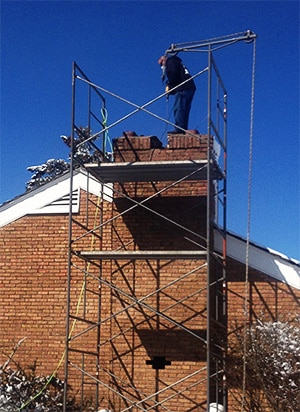
We erect the necessary heavy-duty steel safety scaffolding and deploy rigid wall braces and engineered tension bands to physically lock the compromised chimney to the structural framing of your house, completely neutralizing the immediate collapse risk.

With the masonry fully secured and stabilized, we execute a forensic analysis of the mortar joint failure, map out the required tuckpointing areas, and provide you with a comprehensive debriefing on the steps needed for permanent restoration.
Our 3-Step Emergency Masonry Triage Process
We have refined our stabilization response into a highly disciplined, three-step triage protocol that guarantees immediate safety and long-term durability for your property, avoiding the haphazard methods used by generic handymen.
The absolute first priority in any failing masonry situation is stopping gravity. We do not attempt to grind mortar or remove loose bricks while the overall structure remains unstable. We use engineered tension bands and heavy steel braces to secure the chimney chase to the home's framework, eliminating the immediate threat to your roofline and your family.
Once the chimney is firmly locked in place, we address the root cause of the failure. We use specialized diamond-blade angle grinders to surgically extract the crushed, sandy mortar joints that failed under hydrostatic pressure, clearing out all compromised debris down to solid, undamaged masonry.
We absolutely do not blindly inject modern Portland cement into the resulting voids. We conduct an acid digestion test to scientifically analyze your original mortar composition. This allows us to perfectly calibrate the compression strength, vapor permeability, and aesthetic pigment of the new lime-based mortar to seamlessly match your home's original St. Louis brickwork.
Honest, Line-Itemized Quotes for Tuckpointing
Once the emergency bracing is securely in place and your home is safe from immediate collapse, the focus shifts to the permanent tuckpointing and rebuilding phase. We understand that funding a major structural masonry project is incredibly stressful, which is why we provide absolute financial transparency from day one. We meticulously measure the exact square footage of the failing mortar and identify any specific load-bearing bricks that require total replacement, documenting every detail for your review.
No Guesswork on Structural Bracing Costs
We provide completely transparent, line-itemized quotes for both the initial emergency stabilization and the subsequent long-term tuckpointing services. You will see exactly what the scaffolding setup, the specialized mortar extraction, and the historic brick matching will cost down to the dollar. We refuse to operate on open-ended “Time and Materials” contracts that incentivize slow, inefficient work, and we never bury hidden fees in the fine print. You review and approve the final scope of the restoration before the permanent rebuilding ever begins, putting you in total control of the project.

Trust EBS Home Care LLC for Masonry Stabilization

When your chimney begins dropping bricks and threatening the structural integrity of your roof, you need a local contractor who understands the specific architectural nuances of Overland and the extreme environmental pressures of the Greater St. Louis area. National chains and out-of-state storm chasers do not care about the long-term integrity of your masonry; they only care about cashing a quick insurance check.
EBS Home Care LLC is anchored right here on O’Connell Ave. We are deeply invested in protecting the homes in our immediate community from the devastating effects of hydrostatic expansion and freeze-thaw destruction. Our rapid-response teams are equipped, trained, and ready to deploy at a moment’s notice to brace your leaning chimney, preserve your property, and provide you with honest, highly technical tuckpointing solutions. Do not let failing mortar destroy your home from the outside in. Call our dispatch center immediately to mobilize an emergency masonry stabilization crew to your property today.
Masonry Triage: The Hard Truth About Tuckpointing Costs, Spalling Brick, and Structural Collapse
How much does emergency chimney repair cost in Overland, MO?
The average cost for emergency exterior chimney repair ranges from $1,000 to $4,000, while a total structural rebuild can exceed $7,500. Pricing depends heavily on the depth of the mortar joint failure and the square footage of the spalling brick. We provide a flat-rate quote for the immediate deployment of structural bracing before executing any permanent historic mortar matching or tuckpointing.
Does my homeowner's insurance cover repairs for a leaning chimney?
Yes, most Missouri homeowner’s policies cover emergency masonry stabilization if the structural leaning was caused by a sudden, covered peril like a severe windstorm or a fallen tree. However, insurance adjusters frequently deny claims if the collapse risk is due to long-term neglect, such as unchecked efflorescence or gradual hydrostatic expansion. We document the acute weather damage thoroughly to support your St. Louis County insurance claim.
Can I fix spalling brick myself with a store-bought mortar tube?
No, applying retail-grade caulk or high-strength cement to spalling brick will rapidly accelerate the destruction of your load-bearing masonry. Modern DIY cement traps existing moisture inside the softer historic bricks common in Overland neighborhoods. When the St. Louis freeze-thaw cycle hits, this trapped water causes extreme hydrostatic expansion, literally shattering the surrounding original brickwork.
What are the specific St. Louis County codes for masonry stabilization?
St. Louis County requires a structural building permit if you are removing and replacing a load-bearing segment of the chimney foundation or wall. However, minor cosmetic patching and basic tuckpointing fall under ordinary maintenance exemptions. We ensure all emergency tension bands and rigid steel wall braces comply strictly with the 2015 International Residential Code (IRC) as amended by St. Louis County Ordinance #27,654.
How long does a typical tuckpointing appointment take?
A standard tuckpointing restoration takes between 1 to 3 days, depending on the square footage of the deteriorated mortar and the weather conditions. While our emergency triage team installs safety scaffolding and structural bracing within 4 hours to stop a collapse, the permanent repair requires meticulous extraction. We use specialized diamond-blade angle grinders equipped with HEPA vacuums to safely clear the crushed mortar joints.
What are the early warning signs of a total chimney collapse?
The most critical early warning signs include visible structural leaning, a widening gap between the chimney chase and your exterior siding, and audible popping noises during a winter freeze. Long before gravity takes over, you will typically notice thick white efflorescence stains and piles of sandy mortar accumulating on your roofline. These symptoms indicate that hydrostatic expansion has completely compromised your internal load-bearing masonry.
Is spalling brick considered an emergency?
Yes, significant brick spalling is a structural emergency indicating that the internal mortar bonds have completely failed. Spalling means the brick face has physically blown off due to freezing trapped water, leaving the core of your chimney exposed to direct rainfall. If ignored, this continuous moisture absorption will rot your home’s wooden framing and lead to an imminent roof collapse.
What is the difference between Type O lime mortar and Portland cement?
Type O lime mortar has a low compressive strength of roughly 350 PSI and high vapor permeability, whereas modern Portland cement is rigid, non-porous, and often exceeds 2,500 PSI. Using high-strength Portland cement on mid-century St. Louis homes is a fatal masonry error. The rigid cement resists the chimney’s natural thermal expansion, forcing expanding winter ice to crack the softer historic bricks rather than the mortar joints.