
Clear Your Blocked Furnace Flue Immediately Without Guessing If Your Air Is Safe to Breathe
Because carbon monoxide emergencies cannot wait, our Overland-based response teams are strategically positioned to reach your St. Louis County home with life-saving speed.
As an essential part of our St. Louis 24/7 emergency chimney repair protocol, we operate on a heavily regimented, 2-hour emergency timeline
What to Do When Your Carbon Monoxide Alarm Triggers
If your carbon monoxide alarm triggers, immediately evacuate the property and call 911. Once the fire department clears the home, do not restart your heating system. You are experiencing a life-threatening furnace flue obstruction that requires an emergency masonry extraction to restore safe gas appliance exhaust and utility chimney venting.

Surviving St. Louis Winters with Aging Utility Flues
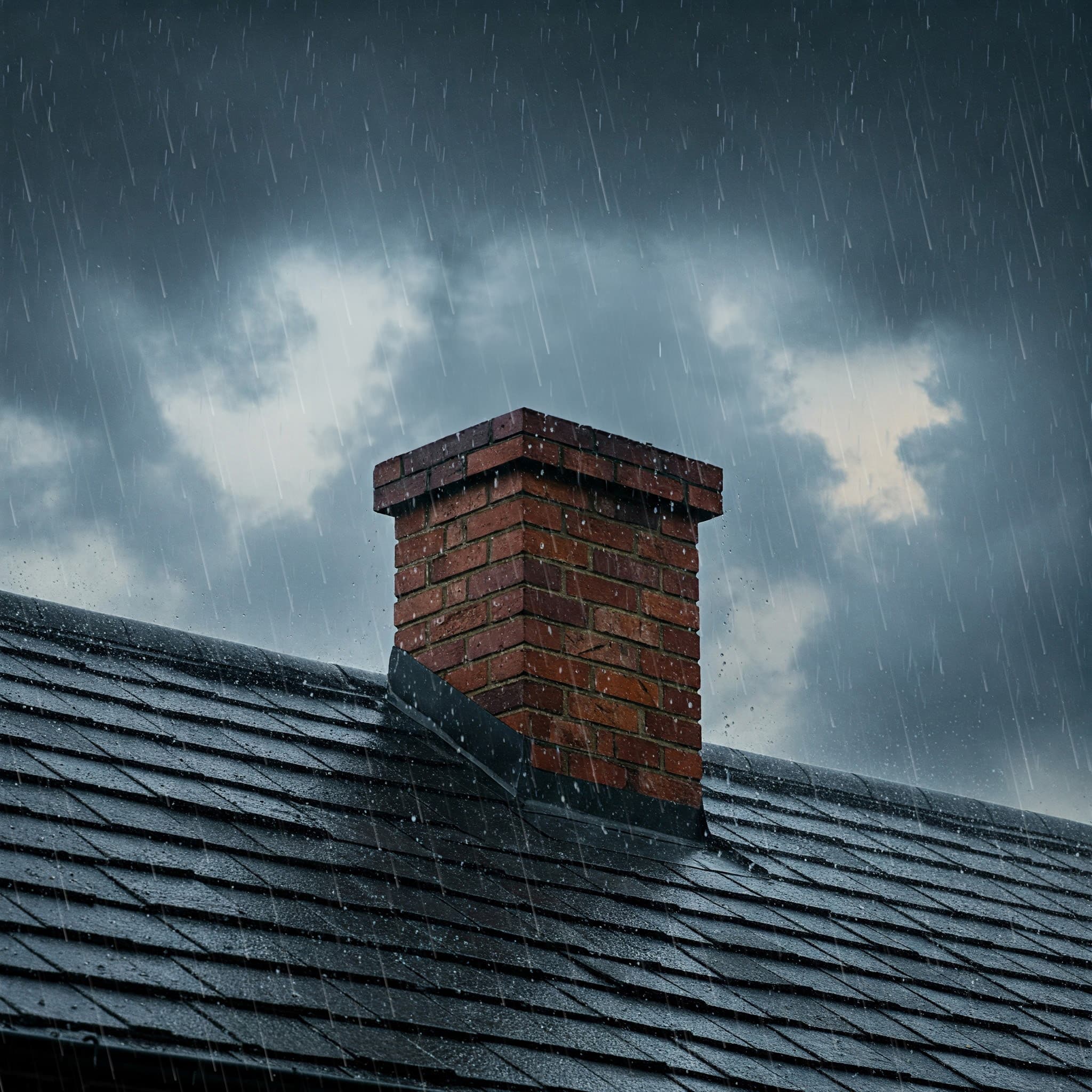
The St. Louis region subjects residential heating systems to brutal extremes. During a deep February freeze, your gas furnace works overtime, dumping massive volumes of hot exhaust into an aging masonry structure. Most homeowners completely ignore their utility flues until a crisis occurs. Unlike a wood-burning fireplace where you can physically see the smoke backing up into the room, a blocked utility flue silently forces toxic gases back into your basement. When temperatures drop below zero and your furnace runs continuously, any restriction in the exhaust pathway immediately forces lethal gas back into the living envelope.
Why Rapid Overland Dispatch is a Matter of Life and Safety
Operating centrally from our Overland dispatch hub on O’Connell Ave allows us to treat a carbon monoxide backdraft as an absolute drop-everything emergency. When lives are on the line, you cannot wait for a contractor driving from three counties away. Our rapid-response units bypass the standard maintenance queue, navigating the I-170 corridor to reach your St. Louis County home fast, securing the mechanical venting before the situation turns fatal.
Stopping a Silent CO Leak in a Finished Basement
Last January, I responded to an emergency call in a completely renovated basement in Overland. The homeowner’s carbon monoxide detector was blaring, and the fire department had just red-tagged their gas water heater and furnace. The family was shivering upstairs, confused because both appliances were brand new. I went down to the utility room, disconnected the galvanized exhaust pipe from the masonry wall, and grabbed a flashlight.
The entire base of the utility flue was buried under two feet of crushed brick and deteriorated mortar. The new, highly efficient furnace was pumping hot exhaust against a solid wall of debris, forcing the gas straight back out of the draft hood. I immediately established a negative pressure containment zone, mechanically extracted over forty pounds of pulverized masonry from the chimney base, and ran a Level 2 camera scan to confirm the pathway was clear. We resolved the drafting failure in under three hours, allowing the family to safely turn their heat back on before the pipes froze.

The Invisible Threat of Gas Appliance Exhaust
A wood fireplace backdraft gives you a clear warning: your room fills with visible, choking smoke. A gas appliance exhaust failure provides absolutely zero physical warning. Carbon monoxide is entirely odorless, tasteless, and invisible. When your furnace or water heater cannot push its exhaust up the chimney, the heavy gases pool across the floor of your utility room and get sucked directly into your home’s HVAC return vents.
From there, the ductwork distributes the poison into every bedroom in the house. By the time you feel the physical symptoms, nausea, dizziness, or a severe headache, your cognitive functions are already impaired. You cannot rely on your senses to detect this failure. The moment an obstruction blocks the pathway, your home becomes a hazard zone.
Why We Trust Bacharach Multi-Gas Detection Meters
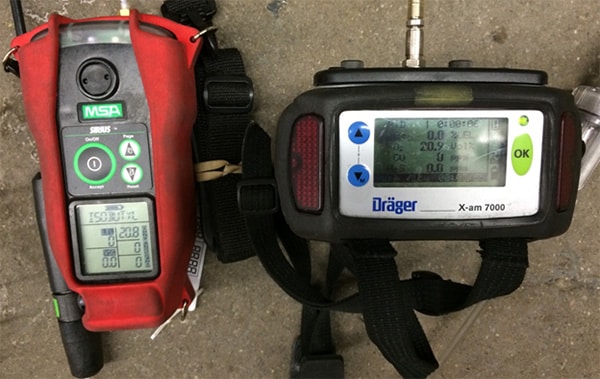
We do not rely on the $20 plastic carbon monoxide alarms plugged into your hallway wall to determine if your utility room is safe for occupation. Those retail units are designed to trigger only when the atmosphere reaches a critical, life-threatening threshold. To accurately diagnose a slow, insidious leak, our forensic technicians deploy industrial-grade Bacharach PCA 400 combustion and emissions analyzers.
Calibrating for Exact Carbon Monoxide Parts Per Million
These advanced meters allow us to measure ambient carbon monoxide down to the exact parts per million (PPM) while your appliances are actively firing. We map the atmospheric concentration around the draft hood and along the flue connector. If the meter detects even 9 PPM of spillage during a continuous run cycle, we know your chimney lacks the proper thermal updraft to evacuate the system safely. This clinical precision ensures we identify the drafting failure long before it reaches a lethal concentration.

Securing Your Home Even If the Furnace Still Turns On
A common and incredibly dangerous misconception is that if the furnace kicks on and blows hot air, the system is perfectly safe. Even if your heating equipment is brand new and operating mechanically flawlessly, it relies entirely on the structural integrity of the masonry chimney to expel the waste gas. A blocked chimney does not stop the burner from igniting.
It simply forces the resulting carbon monoxide back into your house. You can have a perfectly tuned, 98% efficient gas furnace, but if it is attached to a collapsed utility flue, you are operating a lethal hazard. We secure the exhaust pathway regardless of the appliance’s age or operational status.
Diagnosing Clay Tile Collapse in Mid-Century Overland Homes

The vast majority of the housing stock in Overland was constructed during the post-war boom of the 1950s and 1960s. These mid-century brick homes were built with unlined masonry chimneys, or flues lined with extremely fragile terra-cotta clay tiles. While these structures survived decades of venting old, inefficient oil furnaces, they rapidly deteriorate when modern, high-efficiency gas appliances are retrofitted into the basement.

Modern gas furnaces extract so much heat from the combustion process that the resulting exhaust gas is relatively cool. Because it lacks the extreme heat needed to push rapidly up the flue, the gas stalls and condenses on the cold clay tiles before reaching the roof. This condensation is highly acidic. It literally eats the terra-cotta and dissolves the mortar joints from the inside out. Eventually, the weakened clay tile collapse blocks the entire vertical shaft. We forensically diagnose this acidic deterioration, extract the collapsed rubble, and prepare the shaft for a proper, code-compliant stainless steel relining.
How Condensation Destroys Unlined Utility Chimney Venting
The Terrifying Blare of a 2 AM CO Detector
There is nothing more jarring than being violently woken up at 2 AM in the dead of winter by the piercing, high-decibel shriek of a carbon monoxide detector. That electronic blare cuts through the house, sending you into a panicked rush to drag your children and pets out into the freezing Missouri night. You stand on the front lawn, staring at your dark house, smelling absolutely nothing out of the ordinary, yet knowing the air inside is actively poisoned. We eliminate that nightmare scenario. Our emergency extraction team arrives to silence the alarm, mechanically clear the blockage, and restore the quiet comfort of a safe, predictably heated home.
Containing Toxic Soot in Your Laundry Room
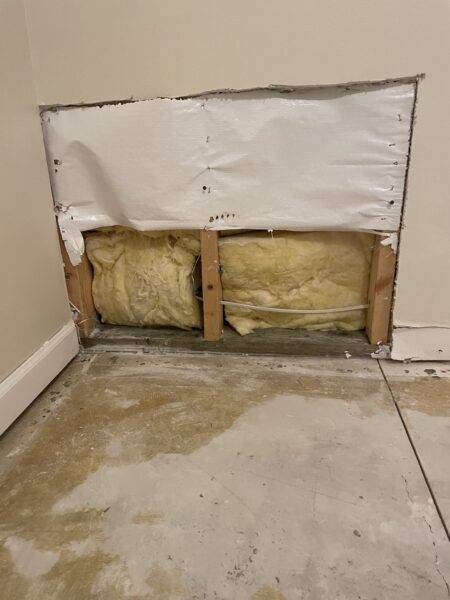
Utility chimneys are notoriously filthy. Decades of scaling clay, rusted metal flakes, and highly acidic soot accumulate in the base of the flue, which is typically located right next to your clean laundry area or finished basement drywall. When we open the cleanout door to extract a massive blockage, the risk of a toxic soot blowout is high.
We absolutely refuse to contaminate your living space. We deploy heavy-duty canvas drop cloths and establish a negative pressure envelope using industrial H-Class HEPA vacuums. By placing the vacuum nozzle directly at the flue breach, we capture 99.97% of the disturbed carcinogenic dust down to 0.3 microns, ensuring your utility room remains spotless while we execute the dirty work.
Our 2-Hour Emergency CO Alarm Response Timeline
When your home is red-tagged and the temperature is dropping, you cannot afford vague arrival windows. We operate on a militant, 2-hour emergency timeline.

You call our dispatch center. We prioritize your CO alarm event, bypassing standard sweeps to instantly mobilize a forensic technician.
We arrive in Overland, deploying our Bacharach gas detection meters to verify the ambient air is safe for our crews to enter the basement.
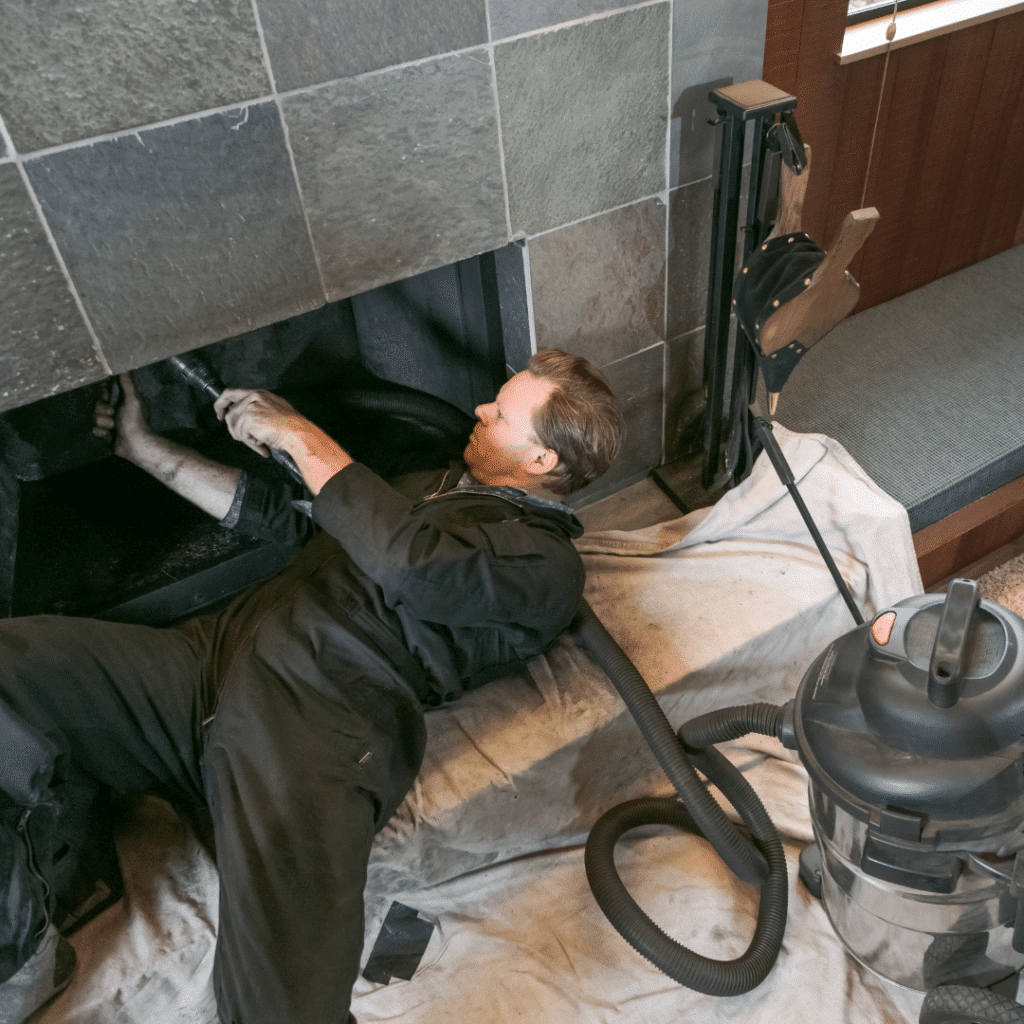
We establish HEPA-vacuum containment, disconnect the flue pipe, and mechanically extract the bird’s nest, dead animal, or collapsed clay tiles that are causing the choke point.
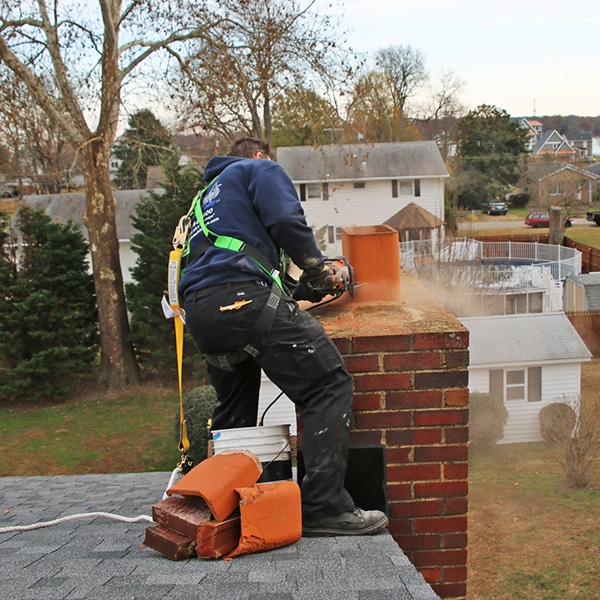
We run a Level 2 video camera up the shaft to verify 100% clearance, conduct a final combustion draft test, and hand you the safety documentation needed to legally restart your furnace.
Your 3-Step Path to Restoring Safe Combustion Draft
We eliminate the chaos of a carbon monoxide emergency by executing a calculated, three-step mechanical response.
We secure the perimeter using calibrated multi-gas meters, proving the exact origin of the spillage at the draft hood and ensuring the ambient environment is stabilized before any masonry work begins.
We deploy heavy-duty rotary whips and extraction tools to obliterate the physical obstruction. We completely remove the crushed debris and acidic soot from the base of the chimney, restoring the original vertical diameter of the exhaust path.
We do not just clear the debris and hope for the best. We reconnect the appliance, fire the burner, and use digital manometers to mathematically prove the chimney is producing the exact negative pressure required to pull the exhaust safely outside.
Upfront Emergency Diagnostics Without Exploitative Pricing
Unethical contractors love to prey on panicked homeowners during a life-safety crisis. They show up at midnight, realize you have no heat, and immediately hit you with massive, open-ended “Time and Materials” contracts that quickly drain your bank account. We completely reject that predatory behavior. When your life is disrupted by a toxic gas leak, you deserve absolute financial transparency.
Flat-Rate Flue Clearing You Can Trust
We provide a strict, upfront flat-rate fee for our emergency diagnostics and flu-clearing services. Our lead technician evaluates the severity of the blockage, details the exact mechanical process required to extract it, and provides you with a firm price before we even power on a HEPA vacuum. There are no hidden holiday surcharges or hourly games, just honest, highly technical labor designed to get your heat turned back on safely.

Rely on EBS Home Care LLC for True Life-Safety Protection

A carbon monoxide backdraft is the most critical failure your home’s infrastructure can suffer. You cannot entrust your family’s respiratory safety to generic roofers or basic heating techs who lack specialized masonry extraction equipment.
Operating right here on O’Connell Ave, EBS Home Care LLC is uniquely equipped to bridge the gap between heavy masonry repair and complex combustion diagnostics. Our technicians carry the exact meters, cameras, and rotary tools required to terminate the threat and secure your utility flues. Do not sleep in a home with compromised exhaust systems. Call our emergency dispatch center immediately to clear your blocked furnace flue and restore safe, reliable heating to your property today.
CO Emergency : The Hard Truth About Flue Clearing Costs, Clay Tile Collapse, and Carbon Monoxide Backdrafts
How much does emergency furnace flue cleaning cost in Overland, MO?
The average cost for emergency furnace flue clearing in Overland ranges from $350 to $600. EBS Home Care LLC provides a strict, upfront flat-rate fee for the mechanical extraction of a furnace flue obstruction and the Bacharach multi-gas detection testing. If we discover severe structural degradation during our camera scan, we will provide a separate, transparent quote for the code-compliant stainless steel relining.
Can I fix a furnace flue obstruction myself with a standard vacuum?
No, attempting to clear a utility flue yourself with a retail shop vacuum will immediately contaminate your home with carcinogenic soot. Standard household vacuums lack the H-Class HEPA filtration required to safely trap highly acidic gas-appliance exhaust particles as small as 0.3 microns. Professional extraction ensures the physical blockage is removed without triggering a secondary carbon monoxide backdraft into your basement.
Does my homeowner's insurance cover repairs for a clay tile collapse?
Yes, most standard Missouri homeowner’s policies will cover the mechanical repair of a clay tile collapse if it was caused by a sudden, covered peril like a lightning strike or extreme thermal shock. However, adjusters frequently deny claims if the utility chimney venting failed due to long-term acidic condensation and standard neglect. Our forensic technicians provide the rigorous NFPA 211 standards documentation required to help validate your structural damage claim.
How long do I have to wait before turning my furnace back on after flue clearing?
You can safely turn your furnace back on within 2 to 3 hours of our emergency team arriving at your Overland property. Once we mechanically remove debris from the base of the chimney, we immediately perform volumetric airflow testing with digital manometers. This scientific verification ensures your system has permanently overcome the drafting failure before we leave, allowing you to restore heat the exact same day.
What are the early warning signs of a furnace flue obstruction before a CO alarm triggers?
The most definitive early warning signs include heavy condensation on your interior windows, a faint sulfur or “rotten egg” smell near the utility room, and rust flakes accumulating around the draft hood. Long before an actual carbon monoxide backdraft triggers your 2 AM alarm, a severe restriction in the exhaust pathway will cause your gas furnace flames to burn a lazy yellow or orange instead of a crisp, efficient blue.
What are the specific St. Louis County codes for utility chimney venting repairs?
St. Louis County Mechanical Code Rule 7 explicitly dictates that any structural modifications to utility flues, including the installation of a new stainless steel liner, must be overseen by a licensed mechanical contractor. While the emergency extraction of a bird’s nest does not require a structural permit, rebuilding a chimney after a collapse of clay tiles mandates strict adherence to municipal clearance-to-combustibles laws to prevent house fires.
What is the difference between standard chimney sweeping and utility flue clearing?
Standard chimney sweeping uses simple poly brushes to remove flaky wood soot, whereas utility flue clearing requires heavy-duty rotary tools to extract compacted masonry debris and acidic scaling. Because gas appliance exhaust creates highly corrosive condensation, an unlined brick chimney often suffers from severe internal degradation. We deploy specialized extraction equipment to safely break apart the hardened blockage without destroying the surrounding load-bearing brickwork.
Is it safe to stay in my house if I open the windows during a carbon monoxide backdraft?
No, it is never safe to remain inside your home during an active carbon monoxide backdraft, even if all your doors and windows are wide open. Carbon monoxide is an invisible, heavy gas that pools across your floors and aggressively binds to your red blood cells, causing severe neurological damage before you even realize you are being poisoned. You must evacuate the property immediately, call 911, and wait for our forensic technicians to secure the environment.