
Restore Crisp Indoor Air Quality Instantly Without Tearing Down Your Porous Masonry Chimney
Our odor-neutralization agents are scientifically formulated to break down the molecular structure of stage 2 and stage 3 creosote tar, completely eliminating off-gassing.
As a core component of our St. Louis residential chimney repair services, we execute a strict, highly predictable 3-hour timeline
What Causes That Foul "Campfire" Smell in Your House?
That persistent campfire or sour mildew smell is caused by creosote off-gassing inside a damp chimney. When combined with negative air pressure inside your home, the toxic, acidic odors from the dirty flue are physically sucked out of the fireplace and pushed directly into your living room.
A fireplace should not make your home smell like a wet asphalt driveway or a rotting campfire. If you are constantly burning candles or spraying room deodorizers to hide a foul stench coming from your hearth, your chimney system is failing. As you burn wood, highly acidic creosote tar coats the inside of the flue and the smoke chamber. When this tar interacts with moisture, it emits a highly pungent odor. Because modern, weatherized homes are sealed so tightly, your HVAC system creates a vacuum effect that pulls this foul-smelling air straight down the chimney. You cannot fix this issue with air fresheners. You must physically extract the tar, neutralize the porous brick, and isolate the draft.

How St. Louis Summer Humidity Amplifies Chimney Odors
Homeowners are often confused as to why their fireplace smells the absolute worst during the middle of July when a fire hasn’t been lit in months. The answer lies in the intense Missouri weather. St. Louis summers bring oppressive heat and massive spikes in ambient moisture. Because traditional brick and mortar are highly porous materials, your chimney acts like a giant sponge, resulting in severe humidity absorption.
As the hot, humid air enters the chimney cavity, it saturates the hardened creosote deposits left over from winter. This moisture reactivates the dormant tar, aggressively accelerating the creosote off-gassing process. The higher the humidity climbs, the worse the smell gets. This creates a highly toxic, acidic vapor that sits heavily inside the masonry until your home’s air conditioning kicks on and pulls that vapor straight into your living space.
Eliminating a Decades-Old Stench in a Maplewood Hearth
Last August, during a week of 90-percent humidity, I visited a homeowner in Maplewood who was at her wits’ end. She had recently bought a beautiful 1940s home, but the living room constantly smelled like wet dog and stale cigarettes. She had already paid a cheap sweep who simply ran a brush up the flue, charged her $150, and told her the smell would “eventually fade.”
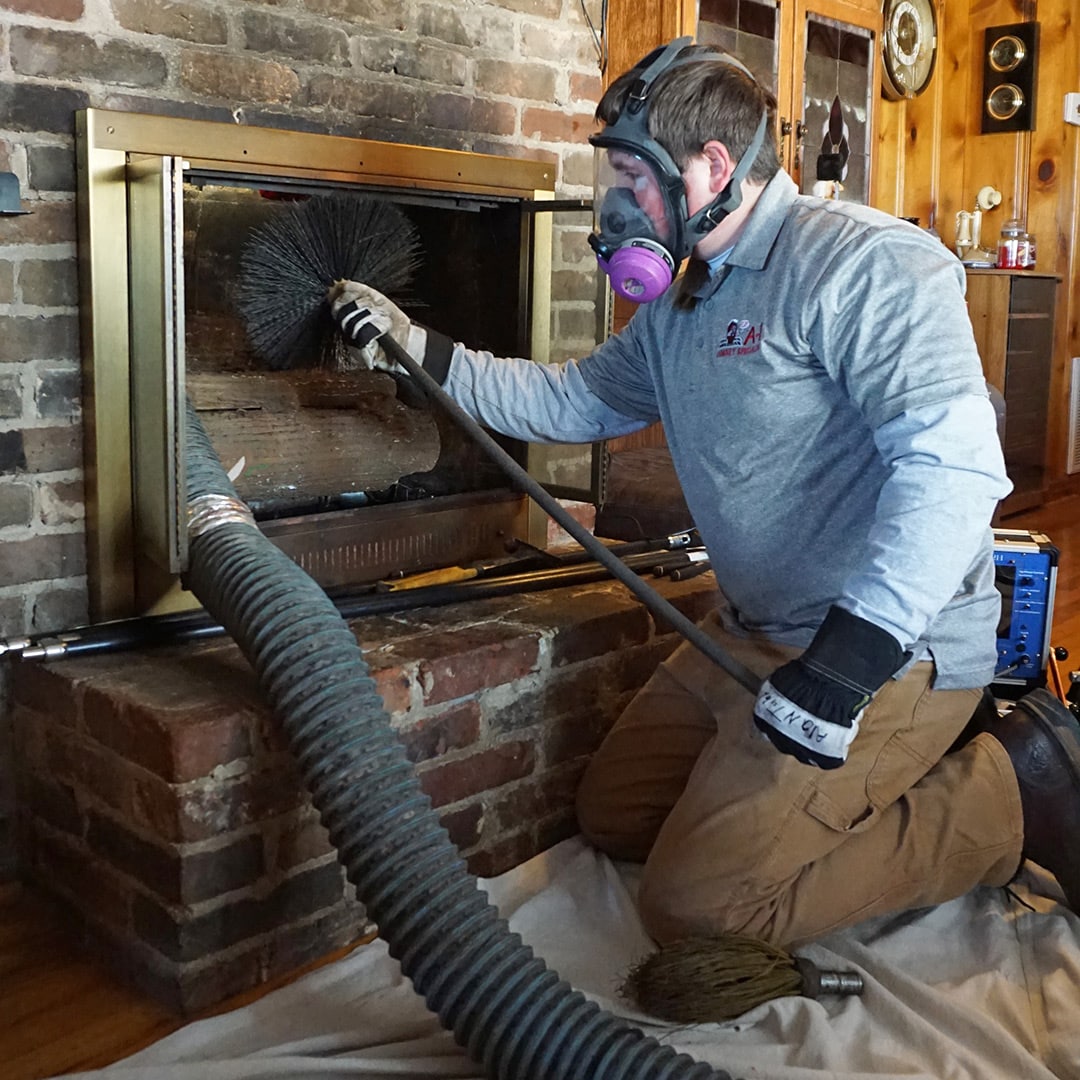
It didn’t fade. I arrived and placed an inspection mirror above the damper. The flue pipe was relatively clean, but the smoke chamber, the cavernous, inverted funnel sitting directly above the firebox, was coated in two inches of sticky, Stage 3 creosote glaze. The previous sweep had completely ignored it. We deployed rotary mechanical whips to shatter the glaze, applied specialized foaming chemicals to dissolve the remaining tar, and installed an airtight damper at the chimney peak. We completely eradicated the stench in three hours, saving her from spending the rest of the summer dealing with nausea-inducing odors.


The Invisible Danger of Breathing Creosote Off-Gassing
Living with a smelly fireplace is not just an aesthetic nuisance; it is a legitimate respiratory hazard. Creosote is a highly complex chemical byproduct of incomplete wood combustion. It consists primarily of polycyclic aromatic hydrocarbons (PAHs), which are scientifically classified as probable human carcinogens.
When you smell that sharp, acrid odor in your home, you are actively inhaling those chemical compounds. Prolonged exposure to creosote off-gassing can trigger severe allergic reactions, exacerbate asthma, and cause chronic irritation to the eyes and respiratory tract. We treat severe chimney odors as a direct threat to your indoor air quality. We do not just mask the scent; we employ a clinical biosanitization protocol to completely neutralize toxic compounds at the molecular level.
Why We Deploy SaverSystems Cerfractory Foam Over Basic Bleach
When homeowners try to clean a smelly firebox themselves, they usually grab a bucket of household bleach and a scrub brush. This is a massive mistake. Bleach is mostly water. When you scrub porous masonry with bleach, the water pushes the toxic creosote spores deeper into the brick, ultimately making the smell significantly worse once the chlorine evaporates.
We reject household chemicals. Our technicians deploy SaverSystems HeatShield Cerfractory Foam. This is an insulating, high-temperature refractory mortar specifically engineered for smoke chamber parging. As we spray-coat the heavily degraded, foul-smelling smoke chamber walls, the Cerfractory Foam expands to up to 50% of its original volume. This expansion physically seals microscopic gaps and smooths jagged, porous brickwork, instantly trapping and neutralizing embedded creosote odors deeply while restoring the masonry’s structural integrity to NFPA code compliance.

The Ultimate Flaw of Using Chemical Sweeping Logs to Cure Smells
The local hardware store is full of retail “sweeping logs” that promise to clean your chimney and eliminate odors if you simply toss them into a burning fire. Relying on these logs to fix a chronic odor problem is a dangerous fallacy.

Chemical sweeping logs contain minerals designed to temporarily dry out light, flaky soot. They have absolutely no effect on the thick, sticky Stage 3 creosote tar that actually causes severe off-gassing. Furthermore, these logs cannot reach the offset corners of the smoke chamber where the heaviest odors originate. Throwing a chemical log at a chronic moisture and odor problem is like putting a Band-Aid on a broken leg. You must utilize mechanical extraction and professional chemical agents to physically strip the tar from the brick.
Containing Soot and Odors During the Extraction Process
The thought of a contractor mechanically grinding away toxic, foul-smelling creosote inside your living room is terrifying. You picture a massive cloud of black soot and acidic dust blanketing your clean carpets and ruining your furniture.
We operate under a militant cleanliness protocol. Our technicians never begin an extraction without establishing absolute negative pressure containment. We lay down heavy-duty impermeable canvas drop cloths and seal the entire firebox opening with thick plastic sheeting. We run our HEPA filtration vacuums continuously from inside the sealed hearth. This setup guarantees that 99.97% of the carcinogenic soot and foul odors disturbed during the mechanical sweeping process are instantly sucked into our equipment, leaving your indoor air perfectly clean.
The Overpowering Scent of Wet Asphalt and Sour Mildew
If your chimney is failing, your nose will tell you long before your eyes do. The distinct odors associated with a compromised flue are unmistakable. If you smell a heavy, sharp scent resembling wet asphalt or hot tar, you are dealing with severe Stage 3 creosote glazing that is actively melting and off-gassing in the summer heat.
If the scent leans closer to sour mildew, damp earth, or a “wet dog,” you are dealing with a severe moisture breach that has triggered massive mold growth inside the porous masonry. Neither of these sensory warnings should be ignored. Both indicate that the protective envelope of the chimney has failed, and negative air pressure is using your flue as a toxic air supply for your home.
A Rigid 3-Hour Timeline for Complete Odor Eradication
When your home smells like a wet campfire, you want the problem terminated immediately. We do not stretch simple remediation jobs over multiple days. We execute a strict, highly predictable 3-hour timeline to restore your home’s air quality.

We arrive in Overland, establish our HEPA vacuum containment, and inspect the smoke chamber and flue to locate the exact concentration of the creosote glazing.

We deploy rotary chain whips to mechanically obliterate the hardened tar. We then apply our antimicrobial foaming agents and Cerfractory Foam to execute the smoke chamber parging, dissolving the deep-set odors.

We access the roofline, clean the flue tiles, and install an airtight top-sealing damper to cut off the humidity absorption. We extract our drop cloths and leave your home smelling fresh and clean.
The 3-Step Forensic Crown Rebuilding Protocol
Standard sweeps just brush the flue and leave you with the exact same smell. We permanently eliminate the stench by executing a rigid, three-step forensic protocol..
We use high-torque drills equipped with heavy-duty rotary chains to violently shatter the hardened Stage 3 creosote that basic brushes cannot touch, stripping the primary odor source down to the bare brick.
We apply specialized, deep-penetrating antimicrobial foams to the porous masonry. This clinical bio-sanitization process breaks down the specific molecular structure of the remaining creosote tar and mold spores, completely neutralizing the off-gassing.
We sever the pathway. We abandon the rusted, leaky throat damper at the bottom of the chimney and install a brand-new, silicone-gasketed top-sealing damper at the very peak of the crown. This completely locks out humid summer air and stops negative air pressure from pulling drafts down the shaft.
Transparent Quoting for Deep Smoke Chamber Sanitization
The chimney repair industry is notorious for bait-and-switch pricing, especially when dealing with invisible issues like odors. A contractor will quote a $99 sweep, realize the smell is actually caused by severe glazing, and suddenly hit you with a $1,500 “Time and Materials” upcharge to scrub the smoke chamber.
We provide absolute financial transparency. Because we forensically assess the exact cause of the odor during our initial inspection, we hand you a strict, upfront flat-rate quote. This covers the mechanical extraction, the chemical bio-sanitization, and the installation of the top-sealing damper. There are no hourly surprises and no hidden material fees. You know the exact cost of a permanent cure before we ever pull a tool off the truck.

Depend on EBS Home Care LLC for Clean Indoor Air
When the humid Missouri summer turns your fireplace into a foul-smelling nightmare, you cannot rely on an amateur handyman with a bottle of bleach. You need a highly technical chimney specialist who understands the exact chemistry of creosote off-gassing and the building science behind negative air pressure.
Operating directly out of Overland, MO, EBS Home Care LLC possesses the clinical tools and masonry expertise required to permanently eradicate the stench. Our technicians strip the toxic glaze, neutralize the porous brick, and install airtight closures to secure your home’s air quality. Do not let a dirty chimney ruin your living space. Call our dispatch center today to schedule a forensic odor diagnostic and breathe clean air again.
Odor Remediation: The Hard Truth About Sanitization Costs, Creosote Off-Gassing, and Negative Air Pressure
How much does chronic fireplace odor removal and bio-sanitization cost in Overland, MO?
The average cost for chronic fireplace odor removal and deep bio-sanitization in Overland ranges from $450 to $900. EBS Home Care LLC provides a strict, upfront flat-rate quote that includes the mechanical creosote glazing removal, the application of SaverSystems Cerfractory Foam, and the installation of a top-sealing damper. This comprehensive protocol permanently stops negative air pressure from pulling toxic smells into your living room without hidden hourly upcharges.
Can I use an ozone generator to fix fireplace creosote odors myself?
No, running a retail ozone generator will not permanently eliminate chronic fireplace odors caused by creosote off-gassing. While ozone can temporarily alter airborne odor molecules, it cannot physically dissolve the sticky Stage 3 creosote tar baked into your porous masonry. Professional odor remediation requires mechanical extraction with rotary chain whips followed by deep smoke chamber parging to permanently seal the chemical source.
Does my homeowner's insurance cover chimney odor remediation and bio-sanitization?
No, standard Missouri homeowner’s insurance policies generally do not cover odor remediation or chimney bio-sanitization. Insurance adjusters classify the accumulation of creosote and the resulting humidity absorption as a preventable maintenance issue rather than a sudden, accidental peril. However, if the foul odor is the direct result of a sudden wildlife intrusion or a wind-lifted chimney cap, our technicians can provide the forensic documentation needed to support a partial claim.
How long do I have to wait to use my fireplace after smoke chamber parging?
You must wait exactly 24 to 48 hours to use your fireplace after we apply the specialized foaming sanitization treatment. This strict curing window allows the SaverSystems Cerfractory Foam to fully expand, seal the microscopic gaps in the porous masonry, and completely neutralize the embedded creosote off-gassing. Once the refractory mortar fully hardens, your chimney is completely safe for high-temperature wood combustion.
What does it mean if my fireplace smells like a wet dog instead of a campfire?
A fireplace smelling like a wet dog or sour mildew indicates a severe moisture breach that has triggered massive mold growth inside the porous masonry. Unlike the sharp, asphalt-like scent of Stage 3 creosote tar, this musty odor means St. Louis rainwater is actively bypassing your chimney cap or flashing and saturating the internal structure. We deploy H-Class HEPA vacuums and EPA-registered antimicrobial foams to completely eradicate these dangerous fungal spores.
What is the difference between Stage 2 and Stage 3 creosote off-gassing?
Stage 2 creosote is a sticky, tar-like residue, whereas Stage 3 creosote is a hardened, highly concentrated glaze that looks like black glass. While Stage 2 emits a mild odor during humid Missouri summers, Stage 3 creosote tar causes severe, toxic off-gassing that permeates your drywall and upholstery. Removing Stage 3 glazing requires high-torque drills and heavy-duty rotary chains, as standard chimney brushes are completely ineffective against it.
Are the antimicrobial foams used for chimney bio-sanitization safe for my pets?
Yes, our chimney bio-sanitization process is 100% safe for homes with pets and children. We establish absolute negative-pressure containment at the hearth using industrial HEPA-filtered vacuums, ensuring that 99.97% of carcinogenic soot and chemical fumes are captured before they enter your living room. The EPA-registered antimicrobial foams we use to neutralize the smoke chamber are clinically safe once applied and leave behind no lingering toxic residue.
What specific tools do you use to remove Stage 3 creosote glaze?
We utilize high-torque drills equipped with heavy-duty rotary chain whips to violently shatter and extract hardened Stage 3 creosote. Basic wire brushes cannot break the bond of this dense, highly flammable byproduct. Once the heavy glazing is mechanically obliterated, we deploy SaverSystems Cerfractory Foam to resurface the jagged brickwork, instantly trapping the remaining odors and restoring the smoke chamber to NFPA 211 compliance.