
Eradicate Highly Flammable Stage 3 Creosote Today Without Risking a Catastrophic Secondary House Fire
Operating from our Overland facility near the I-170 corridor, our emergency response units provide rapid, post-fire safety clearances for all St. Louis County homeowners.
Why Your Chimney Is Pushing Smoke Into the Living Room
Smoke pushing into your living room is caused by a failure in combustion airflow, typically driven by negative air pressure inside the home or a physical flue obstruction. This reverse draft forces toxic byproducts, including soot and carbon monoxide, down the chimney and directly into your breathing space.
When a fireplace operates correctly, it functions as a highly efficient engine. The heat from the fire creates a thermal updraft, pulling oxygen from the room to feed the flames while aggressively pushing the exhaust gases up the flue and out of the house. However, this engine relies on a fragile balance of thermodynamics and atmospheric pressure. When that balance is broken, the engine runs in reverse.
A sudden backdraft is rarely a random occurrence; it is a mechanical or environmental failure. You might be dealing with a collapsed terra-cotta clay tile that has choked off the exhaust path, or fighting the actual atmospheric pressure of your own house. It requires a forensic understanding of how air moves through a structure. We do not guess why your chimney is smoking; we prove it scientifically before we ever suggest a repair.
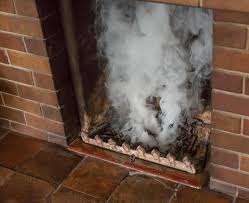

What to Do Immediately After a Chimney Fire
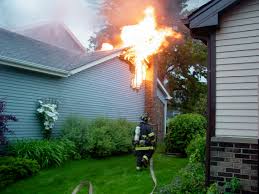
If you have just experienced a chimney fire, immediately evacuate the house, call 911, and do not attempt to extinguish the flames from the bottom up. Once the fire department clears the home, absolutely do not use the fireplace again until a forensic structural inspection is completed.
A chimney fire sounds like a low-flying jet or a freight train roaring through your living room wall. It happens when accumulated creosote ignites inside the flue, pushing internal temperatures well over 2,000 degrees Fahrenheit. The intense heat violently destroys the internal masonry. Your immediate priority is life safety. After the active threat is neutralized by first responders, the real work begins. Your flue is severely compromised, and lighting another fire without a structural clearance is a guaranteed path to a catastrophic building failure.
Surviving Overland's Winter Fire Season
St. Louis winters hit hard, and residents rely heavily on their masonry fireplaces when the deep freezes roll in. But the heavy usage of wet, unseasoned wood during these cold snaps accelerates the buildup of volatile residues. Our local housing stock in Overland features thousands of aging brick chimneys built in the mid-20th century that were never designed to handle modern burn intensities without proper maintenance. When a flue fire erupts in these older structures, the extreme temperature spike causes massive expansion in the masonry, blowing out the exterior brickwork and turning the internal mortar joints to sand.
Why the I-170 Corridor Proximity Matters for Rapid Inspections
After a flue fire, you cannot afford to wait weeks for a contractor to assess the damage while your home sits vulnerable to water intrusion, structural settling, and freezing drafts. Operating directly from our hub near the I-170 corridor allows our emergency response units to reach your Overland property quickly. We secure the compromised structure, tarp the damaged crown if necessary, and provide an immediate safety clearance evaluation before the weather turns.

Uncovering Hidden Thermal Shock in a Midland Blvd Home
Last winter, I responded to a call off Midland Boulevard. The homeowner reported a loud cracking noise the night before but didn’t see any smoke inside the house. They assumed a heavy tree branch hit the roof. I set up our drop cloths and ran a Level 2 camera system up the flue. The screen showed a horrifying reality: they had suffered a massive, completely undetected chimney fire.
The heat had triggered severe thermal shock, causing the original 1950s clay liner to violently split right down the middle. Because the fire burned hot and fast, it starved itself of oxygen before catching the roof framing, but it left a two-inch gap directly exposing the wooden wall studs to the flue exhaust. If they had lit one more fire, the house would have burned down. We immediately locked out the fireplace and scheduled a heavy-wall stainless steel relining to bypass the shattered clay.
Why We Deploy Rotary Chain Flails Over Standard Brushes
You cannot scrub away a glass-like tar deposit with plastic bristles. To physically break the bond between the masonry and the hardened creosote, we deploy specialized rotary chain flails. These heavy-duty mechanical whips are attached to high-torque drills and fed directly into the flue. The steel chains spin at thousands of revolutions per minute, shattering the glaze and stripping the chimney walls back to the bare clay or brick.
The Mechanics of Eradicating Stage 3 Creosote Glaze
This aggressive mechanical extraction is the only proven method to remove the fuel source without destroying the underlying masonry. We combine the rotary chain flail with industrial-grade chemical modifiers that temporarily break down the tar’s molecular structure, allowing the chains to aggressively chip it away. This process completely eradicates the fire hazard and restores the original diameter of your flue, saving the existing structure from a complete teardown.


The Silent Threat of Clay Tile Micro-Fractures
The most dangerous aftermath of a chimney fire is the damage you cannot see with a flashlight. Terra-cotta clay liners are incredibly brittle. When subjected to the 2,000-degree spike of a flue fire, the clay suffers immediate structural failure. Even if the tile doesn’t completely collapse, the heat creates thousands of deep micro-fractures in the clay tile.
These hairline cracks act as direct pathways for extreme heat and combustible gases to escape the flue and ignite the wooden framing of your house. This process is known as secondary combustion. The next time you use the fireplace, the heat transfers right through those fractures, silently catching the walls on fire from the inside out. We deploy 360-degree pan-and-tilt cameras to map every millimeter of the liner, revealing these fractures before they can cause a secondary disaster.
Securing NFPA 211 Compliance for St. Louis County Codes
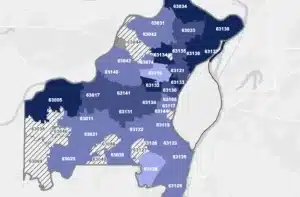
After a thermal event, you cannot just slap some high-heat mortar over the cracks and call it a day. St. Louis County building codes are incredibly strict regarding damaged flues. We perform a rigorous NFPA 211 inspection, which is the national safety standard for solid fuel-burning appliances. This requires a comprehensive visual and video examination of all accessible portions of the chimney, exterior and interior, to verify that the structure still maintains the proper clearance to combustibles.
When a chimney fire destroys your liner, your homeowner’s insurance policy typically covers the massive cost of the mechanical repair. However, adjusters will aggressively deny your claim if you hand them a handwritten invoice from an uncertified handyman. We provide a fully documented, insurance-compliant report containing high-resolution video stills of the thermal shock damage. We speak the exact technical language the adjusters require, proving the sudden failure and securing your payout without the bureaucratic runaround.
Why Your Insurance Adjuster Requires This Report
Our HEPA Vacuum Standard for Carcinogenic Ash

When a chimney fire ravages a flue, it leaves behind a massive volume of highly toxic ash. This material contains high concentrations of Polycyclic Aromatic Hydrocarbons (PAHs), which are classified as potent human carcinogens. The absolute last thing you want after surviving a house fire scare is a careless contractor tracking this hazardous residue across your living room carpet or kicking it up into your home’s breathable air.

We operate under a strict cleanliness protocol. Our forensic sweeps do not enter your home without applying surgical-grade shoe covers and laying down impermeable drop cloths. We do not use standard shop vacuums that simply blow microscopic dust right back out the exhaust. We utilize specialized H-Class vacuums equipped with High-Efficiency Particulate Air (HEPA) filters. These advanced filtration systems are certified to capture 99.97% of airborne particles as small as 0.3 microns. By maintaining negative pressure containment at the hearth, we guarantee that the microscopic PAHs and soot disturbed during the rotary chain extraction are safely trapped within our equipment, leaving your indoor air quality pristine.
The 48-Hour Post-Fire Emergency Timeline
After the fire department clears the scene, you are left with a compromised, highly vulnerable structure. You cannot afford to wait weeks for a generic contractor while your home sits exposed to the elements. We execute a strict, predictable, rapid-response timeline to stabilize your Overland property.

Once dispatched, our technicians arrive to secure the immediate perimeter. If the chimney crown or brickwork was blown out by extreme thermal expansion, we apply heavy-duty emergency tarping to temporarily seal the breach and prevent incoming St. Louis weather from causing secondary water damage.

We deploy our Level 2 video inspection cameras to map the exact extent of the clay tile micro-fractures. We run the HEPA vacuums to clear the loose debris and capture the high-resolution evidence required by your homeowner’s insurance adjuster before the scene is compromised.

With the structure stabilized and the insurance report filed, we deploy the rotary chain flails to completely eradicate any remaining Stage 3 creosote glaze. We then provide the exact structural measurements needed to fabricate and install a heavy-wall stainless steel liner, moving you directly into the permanent restoration phase.
Your Three-Step Path to Proper Chimney Ventilation
We establish HEPA vacuum containment to prevent carcinogenic ash from entering your living room, then send our optic cameras from the firebox to the crown, mapping the exact extent of the heat damage and structural shifting.
We deploy our rotary chain whips to aggressively strip away any remaining highly flammable byproduct that survived the initial burn, ensuring a secondary fire cannot ignite during the testing phase.
We compile the exact dimensions of the failed clay tiles and calculate the precise specifications required for a heavy-wall stainless steel relining, handing you the hard data needed to move forward with the restoration.
Honest, Flat-Rate Diagnostics for Thermal Shock Damage
Dealing with the aftermath of a house fire is terrifying, and the last thing you need is a contractor holding your wallet hostage. The industry is notorious for bait-and-switch pricing, where a company quotes a cheap initial inspection but tacks on massive hourly labor fees once they set up their camera equipment. We reject this completely. We operate on a strict, upfront flat-rate diagnostic fee.
Never Accept an Hourly Guessing Game
You will know the exact cost of the NFPA 211 inspection and video scan before we pull a single tool off the truck. We do not charge by the hour for diagnostics, and we do not perform destructive teardowns just to find the problem. Once the structural failure is mapped, we provide a separate, line-itemized quote for the mechanical restoration. You get the facts without the financial ambush.

Trust EBS Home Care LLC for Post-Fire Recovery
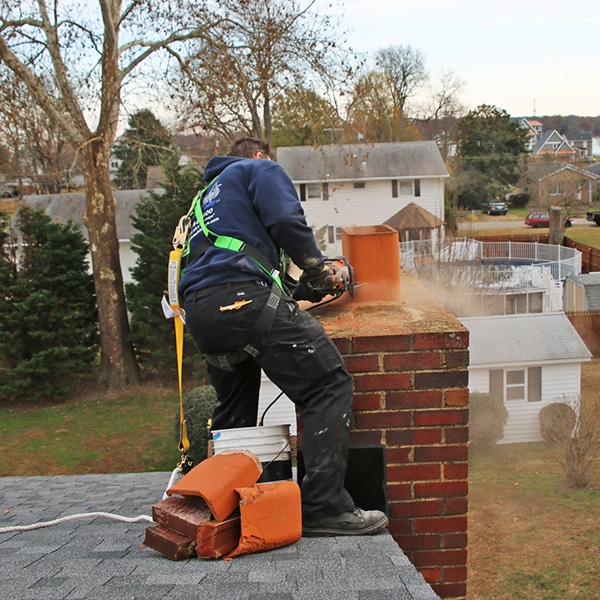
A chimney fire fundamentally alters the structural safety of your home. You cannot trust the recovery process to a general contractor or a generic sweep who lacks the specialized diagnostic tools to see the hidden damage.
EBS Home Care LLC is anchored right here in Overland, MO, and our forensic technicians possess the exact expertise required to secure your property. We strip the hazards, map the fractures, and handle the rigorous insurance documentation so you can focus on getting your home back to normal. Do not gamble with a compromised flue. Call our dispatch center immediately to mobilize an emergency response unit and secure your post-fire safety clearance today.
Operating directly from our dispatch hub in Overland, EBS Home Care LLC is uniquely positioned to provide rapid, highly technical draft corrections to homeowners across the metropolitan area. Our certified technicians are equipped with the most advanced diagnostic camera systems on the market, allowing us to accurately pinpoint your flue obstruction and restore safe combustion airflow without the guesswork. Do not let negative air pressure and carbon monoxide threats render your fireplace useless this winter. Call our dispatch center today to schedule a forensic Level 2 video inspection.
Post-Fire Triage: The Hard Truth About Extraction Costs, Stage 3 Creosote, and Insurance Claims
How much does Stage 3 creosote removal cost in Overland, MO?
The average cost for Stage 3 creosote removal using a rotary chain flail ranges from $400 to $800, depending on flue height and glaze severity. Standard chimney sweeps in St. Louis County cannot remove this highly flammable byproduct with basic brushes and will often walk away from the job. We charge a transparent, flat-rate fee for the mechanical extraction and chemical modifiers, ensuring the hazard is completely eradicated before any stainless steel relining is quoted.
Does my homeowner's insurance cover repairs for chimney fires?
Yes, most standard Missouri homeowner’s policies cover the mechanical repair of thermal shock damage caused by a sudden chimney fire. However, adjusters will frequently deny claims if you cannot prove the clay tile micro-fractures were caused by an acute thermal event rather than long-term neglect. Our strict NFPA 211 inspection provides your insurance carrier with the forensic Level 2 video documentation required to guarantee your payout for a structural rebuild.
Why shouldn't I use chemical sweeping logs for Stage 3 creosote glaze?
Chemical sweeping logs are completely ineffective against hardened Stage 3 creosote glaze and will not neutralize the immediate fire hazard. While they may temporarily dry out minor, flaky soot, they cannot physically break the bond of the thick, glass-like tar baked onto your masonry. Relying on a retail log instead of professional rotary chain flail extraction leaves your Overland home at extreme risk for a catastrophic secondary combustion event.
What are the signs that I need a post-chimney fire inspection immediately?
The most definitive signs of an undetected chimney fire include cracked exterior brickwork, warped metal dampers, or finding puffy, honeycomb-like creosote chunks resting in your firebox. In older St. Louis homes, a sudden, intense draft or a loud roaring noise like a low-flying jet during a winter burn indicates a severe thermal event has occurred. You must schedule an immediate NFPA 211 inspection to check for hidden clay tile micro-fractures before ever lighting another fire.
Can you perform rotary chain extraction even if I have an old terra-cotta clay liner?
Yes, our specialized rotary chain whips are specifically engineered to shatter the hardened glaze without destroying the underlying terra-cotta clay tiles. We utilize precise, high-torque drills paired with industrial-grade chemical modifiers that temporarily weaken the tar’s molecular structure. This allows our forensic team to safely strip the highly flammable byproduct from your 1950s St. Louis chimney without triggering an unnecessary structural collapse.
Is the chimney fire cleanup process safe for my pets and children?
Yes, our post-fire extraction process is 100% safe for occupied homes because we establish immediate negative pressure containment at the hearth. We utilize H-Class HEPA vacuums certified to capture 99.97% of carcinogenic airborne particles down to 0.3 microns. This strict clinical protocol ensures that none of the toxic Polycyclic Aromatic Hydrocarbons (PAHs) or fine ash disturbed by the rotary chain flail enter your family’s breathable indoor air.
How long does a typical Stage 3 creosote removal appointment take?
A full mechanical extraction of Stage 3 creosote glaze typically takes between 2 to 4 hours. Because the tar is hardened like black glass, our technicians must systematically work the rotary chain flail inch by inch from the firebox all the way to the chimney crown. We complete this intensive extraction during the “Hours 24-48” window of our emergency timeline to ensure your property is rapidly stabilized.
What is the difference between standard chimney sweeping and mechanical creosote extraction?
Standard chimney sweeping uses poly or wire brushes to remove loose, flaky soot, whereas mechanical extraction uses motorized steel chains to obliterate hardened Stage 3 creosote glaze. A traditional sweep cannot physically break through the dense tar that causes severe flue fires in St. Louis homes. Mechanical extraction completely strips this highly flammable byproduct down to the bare masonry, restoring the original diameter and safety of the flue.