
Terminate Your Chimney Leak Within 2 Hours Before Masonry Saturation Destroys Your Walls
Stop the panic. Our rapid-response emergency fleet reaches your St. Louis County property in under 2 hours.
As part of our St. Louis 24/7 emergency chimney response, we stop the bleeding fast
What To Do When Water Is Pouring Down Your Chimney
If water is actively pouring down your chimney, you are experiencing severe water ingress that requires immediate mitigation. Turn off nearby electrical breakers, lay heavy tarps inside the firebox, and dispatch an emergency masonry crew to apply temporary exterior flashing sealant and stop the breach before structural saturation occurs.
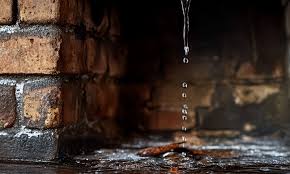
When a severe Midwestern storm hits, and water begins cascading down the interior walls of your fireplace, the instinct is to grab a bucket and a stack of old towels. However, catching the drips at the bottom does absolutely nothing to stop the leak at the roofline. A chimney acts like a giant funnel. When the protective outer layers fail, whether it is a torn piece of step flashing, a rusted chase cover, or cracked concrete at the peak, hundreds of gallons of rainwater can be channeled directly into your living space in a matter of hours.
This is not a situation where you can wait for the rain to stop before taking action. Every minute that water continues to flow through the system, it is soaking into the porous brickwork, dissolving the mortar joints from the inside out, and running behind your interior drywall. You need emergency tarping and immediate diversion tactics. Our crews deploy directly in the rain to throw heavy-duty impermeable tarps over the crown and physically strap down the breach. We do not perform permanent masonry work during an active downpour, but we absolutely stop the bleeding right then and there, so you can sleep through the rest of the storm without worrying about your ceiling collapsing.



Surviving Missouri’s Freeze-Thaw Whiplash
The specific climate of the Greater St. Louis area is brutal on exterior brickwork. We regularly experience extreme weather whiplash, where a humid, 75-degree afternoon is immediately followed by a plunging cold front that drops the temperature to 15 degrees overnight. This rapid fluctuation is the primary catalyst for sudden, catastrophic masonry failure. When the brick acts like a sponge and absorbs heavy rainfall, that trapped moisture violently expands by 9% the moment it freezes. This extreme hydrostatic pressure physically blows the face off the bricks and blasts the mortar out of the joints.
When that frozen moisture thaws the next morning, it leaves behind massive voids. The next storm pushes water straight through those new cavities, bypassing your roof entirely and flooding your interior. You cannot treat a St. Louis chimney the same as a chimney in Arizona or Florida. It requires specialized, climate-specific defense mechanisms designed specifically to combat this aggressive freeze-thaw cycle.
Why Proximity to the I-170 Corridor Matters for Response Times
When you have active water pouring onto your hardwood floors, you do not have time to wait for a contractor to drive from three counties away. Operating directly out of our headquarters on O’Connell Ave in Overland gives us a massive logistical advantage. We utilize the I-170 and Page Avenue corridors to bypass regional bottlenecks, allowing our emergency fleet to reach almost any property in the central St. Louis County grid rapidly. We get boots on your roof and tarps over your masonry before the storm cell even finishes passing over.
How We Stopped a Midnight Roof Leak in Overland
I got a call late last April during one of those torrential spring downpours that completely overwhelm the gutters. The homeowner lived over near Woodson Road, and she was in an absolute panic. She woke up to the sound of steady splashing, only to find that the firebox pooling had completely flooded her hearth, and water was actively migrating across her living room floor. She had tried stuffing trash bags up the damper, but the water was coming down the outside of the flue liner, bypassing the damper entirely.
I dispatched our on-call truck, and we were in her driveway in 35 minutes. When I got up on the roof with my headlamp, the problem was obvious. The original galvanized base flashing, likely installed thirty years ago, had completely rusted through at the corners. High winds had lifted the metal, creating a two-inch gap directly into the attic space. I couldn’t rebuild the flashing in the dark during a rainstorm, so I used a specialized surface-tolerant mastic that adheres even to wet shingles to lock down a heavy canvas tarp over the entire base of the chimney.
We stopped the leak completely within 15 minutes of arriving, dried out her firebox, and returned 3 days later, when the sun was out, to fabricate and install custom, permanent stainless-steel flashing.


The Hidden Threat of Masonry Saturation
The most dangerous part of a leaking chimney is not the water you can see dripping onto your hearth; it is the hundreds of pounds of water you cannot see. When exterior waterproofing fails, the brick-and-cinderblock structure absorbs water until it reaches total masonry saturation. At this point, the chimney structure essentially becomes a massive, wet sponge sitting directly inside the wooden framing of your home.
This hidden moisture creates a cascading chain of destructive events. First, the soaked masonry transfers water directly into your attic insulation, rendering it useless and causing your heating bills to spike. Second, the constant damp, dark environment behind your drywall becomes a perfect breeding ground for toxic black mold, which gets pulled into your home’s HVAC return vents. Finally, prolonged exposure to trapped water rots the structural wooden headers that support your roof trusses.
If you simply caulk a visible crack and ignore the saturated bricks, the internal wood rot will continue entirely unchecked. We deploy specialized thermal imaging cameras to map the exact extent of the water migration, ensuring we do not leave hidden moisture trapped inside your walls.
Why We Reject Cheap Tar and Only Use Breathable Elastomeric Sealants
The local roofing industry is plagued by contractors who try to fix chimney leaks by slathering black roofing tar or cheap hardware store silicone all over the brickwork. This is a massive, costly mistake. Tar and basic silicone are non-porous. While they might stop water from getting in, they also trap all the existing moisture inside the brick. When the sun hits the chimney, that trapped moisture turns to vapor, expands, and blows the tar right off the wall in giant, ugly flakes.
We completely reject these outdated methods. We utilize commercial-grade, moisture-curing elastomeric sealants that meet rigorous ASTM C920 Class 50 specifications for expansion and contraction. These materials are engineered to stretch and compress with the extreme temperature shifts of the Midwest without tearing or losing adhesion.
The Science Behind Vapor-Permeable Flashing Sealant
We specifically deploy 100% vapor-permeable silane-siloxane compounds when treating the masonry face. The science behind this flashing sealant is critical. The molecular structure of the sealant is small enough to penetrate deep into the pores of the brick, but large enough to block liquid water droplets from entering. Crucially, the compound remains breathable, allowing internal moisture and gases to escape the structure freely. This guarantees that your chimney can physically dry itself out after a storm, permanently breaking the cycle of internal freeze-thaw destruction.

Stopping the Water Even If Your Chimney Crown is Spalling
A common fear among homeowners is that their chimney is too far gone to fix in an emergency. They look up, see chunks of concrete missing from the top, and assume they have to endure the leaking until they can afford a ten-thousand-dollar total rebuild. Even if you have severe chimney crown spalling, with the entire top concrete pad cracked, shifting, or actively falling apart, we can still stop water ingress today.
You do not have to live with a flooded living room while waiting for a major construction project to be completed. Our emergency crews are equipped with specialized, fiber-reinforced crown patching compounds that can bridge large gaps and temporarily lock fractured concrete together. We will wrap the compromised crown in a high-tensile waterproof membrane, secure it tightly, and completely eliminate the water entry point. This emergency triage stops the active interior destruction immediately, buying you the crucial time you need to properly plan, budget, and schedule a permanent, steel-reinforced concrete crown rebuild without the pressure of an ongoing flood in your house.
Why Waiting Two Weeks for the "Other Guys" Guarantees Firebox Pooling
We use tools designed to access the problem with minimal collateral damage.

The standard operating procedure for legacy chimney companies in the St. Louis region is to put you on a waiting list. You call them in a panic because your ceiling is leaking, and their receptionist tells you they can send an estimator out on the 14th of next month. In the chimney repair industry, speed is not a luxury; it is the only defense against escalating collateral damage.

If you leave a compromised chimney exposed to the elements for two weeks during the Missouri spring rain season, you are guaranteeing massive secondary damage. Water will bypass the flue and run directly down the interior walls of the fireplace, leading to severe firebox pooling. Once water pools on the firebox floor, it begins to rust the cast-iron damper assembly, necessitating a complete mechanical replacement. It also degrades the refractory cement panels that protect your home from fire heat. By the time the “other guys” finally show up to give you a quote, a simple $400 flashing repair has escalated into a $3,500 total firebox and damper rebuild because the water was allowed to sit and fester. We refuse to operate that way.
Addressing Efflorescence on 1960s Overland Brick Homes
Overland is defined by its beautiful, mid-century brick architecture. However, many of these homes built in the 1950s and 1960s are currently exhibiting a glaring symptom of water failure: thick, powdery white stains streaking down the exterior brickwork. This mineral deposit is called efflorescence. It is not just an ugly cosmetic issue; it is a blaring alarm that your chimney is taking on water.
When rainwater breaches the chimney cap or flashing, it migrates down through the bricks. As the water travels through the masonry, it dissolves naturally occurring salts and minerals buried deep within it. When the sun comes out, it draws that moisture to the exterior face of the brick, where the water evaporates, leaving crystallized white salt behind. Power washing it off is the worst thing you can do, as you are just blasting more water into the already compromised brick.
Why Older Mortar Joints Fail Under Hydrostatic Pressure
The mortar used on these mid-century homes is highly susceptible to prolonged exposure to moisture. When hydrostatic pressure forces water through these older, lime-heavy mortar joints, the joints become soft, sandy, and easily raked out with a bare finger. We diagnose the exact entry point causing the efflorescence, seal the breach, and then use specialized, masonry-safe chemical neutralizers to safely extract the salt from the brick face.
Yes, We Will Stop the Active Leak Without Ripping Off Your Roof
Homeowners often hesitate to call for emergency leak repairs because they have a terrifying vision of contractors showing up with sledgehammers, ripping off a massive section of their expensive roof shingles, and leaving their home exposed to the elements. This is a valid fear based on the sloppy practices of uncertified handymen.
We execute surgical, highly targeted water mitigation. We do not need to tear apart your roof deck to stop an active leak. Our technicians are trained in advanced, non-destructive moisture tracking. We use high-resolution thermal imaging to trace the exact temperature anomaly of the water path beneath the shingles. Once we pinpoint the exact point of failure, whether it is a single piece of rusted step flashing or a blown-out mortar joint hiding behind the siding, we use localized containment to isolate that specific area. We gently lift the necessary shingles, slide in the replacement metal, seal it with commercial mastic, and press the original shingles back into place. Your roof remains fully intact, and the leak is terminated.

From Our O'Connell Ave Dispatch to a Waterproofed Chimney in Under 4 Hours
When water is entering your home, the unknown timeline is the most stressful part of the ordeal. We eliminate that anxiety by operating on a strict, predictable, rapid-response timeline.

The moment you call our dispatch center, an emergency masonry technician is mobilized from our Overland headquarters. You receive a text message with the technician’s ETA and GPS tracking, so you aren’t left wondering when we will arrive.
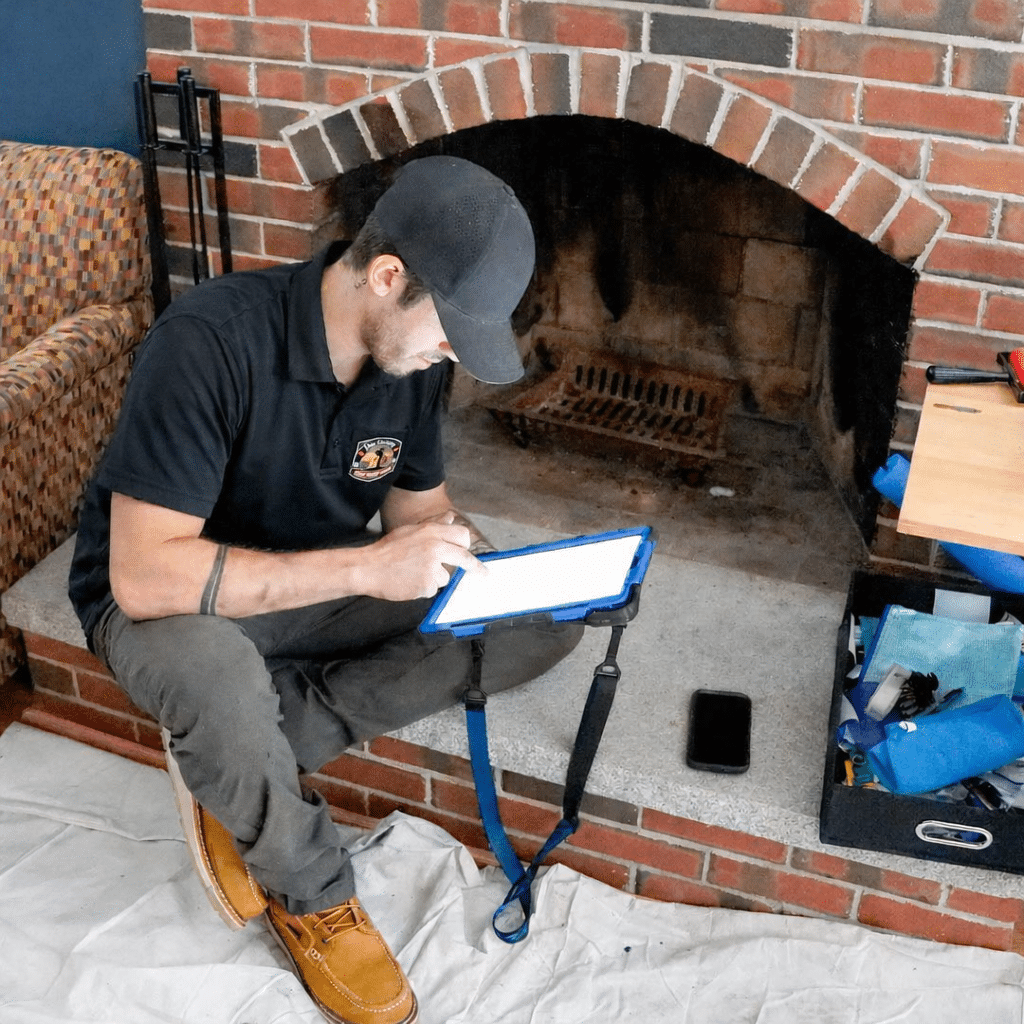
Upon arrival, we do not waste time with long sales pitches. We immediately deploy interior drop cloths to protect your flooring, get up on the roof, and execute heavy-duty tarping and water diversion to physically stop the water from entering the building.
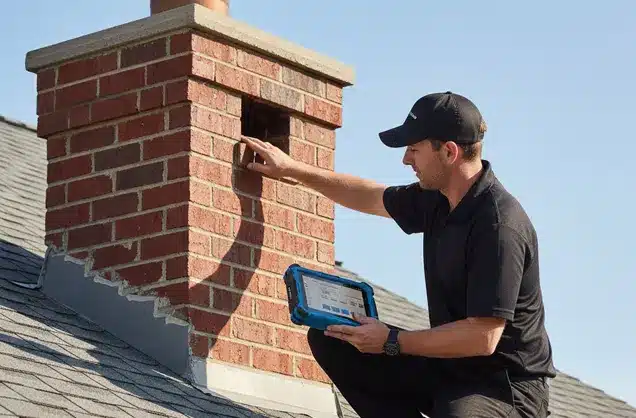
Once the bleeding has stopped, we perform a forensic moisture diagnostic with thermal cameras to document exactly how far the water has migrated behind your walls, providing photographic evidence for your homeowners’ insurance claim.

We apply temporary, moisture-curing sealants to secure the tarping, clean up all our equipment, provide a debriefing on the failure point, and leave your property clean, dry, and protected from the elements.
Respecting Your Home While Tracing Water Ingress
The residential trades have earned a bad reputation for treating customers’ homes like dirty construction sites. When a chimney is actively leaking, it creates a toxic soup of rainwater mixed with black soot, acidic creosote, and crumbling mortar. The absolute last thing you need is a careless contractor tracking that hazardous, staining sludge across your white living room carpet.
We treat your property with militant respect. Our technicians do not step foot past your front door without surgical-grade shoe covers. Before we ever open your fireplace damper to inspect the water pooling, we lay down heavy-duty, waterproof canvas drop cloths that cover the entire hearth and surrounding traffic areas.
Our Drop-Cloth and HEPA Vacuum Standard
If water ingress has dislodged soot or nesting debris into the firebox, we do not sweep it out with a standard broom, which kicks carcinogenic dust into the air you breathe. We deploy industrial vacuums equipped with dual-stage HEPA filtration systems. This ensures that 99.97% of the airborne particulate matter disturbed during the inspection is captured and safely removed from your home, leaving your indoor air quality pristine.
St. Louis County Code Compliance for Emergency Weatherproofing
When dealing with structural masonry and roof penetrations, amateur repairs are not just ineffective; they are illegal. Slapping unrated caulking over a structural gap violates the stringent building codes designed to protect homes in this region from wind uplift and fire hazards.
We strictly comply with the 2015 International Residential Code (IRC), as amended by St. Louis County Ordinance #27,654. This means that every piece of emergency flashing we secure and every temporary crown seal we apply meets the municipal standards for weatherproofing and structural integrity. When you eventually decide to sell your Overland home, our repair work will easily pass the scrutiny of any municipal building inspector or aggressive buyer’s agent. We do not do hack jobs, we do not cut corners, and we document our compliance thoroughly so you have a permanent record of professional, code-compliant mitigation.
Our 3-Step Rapid-Response Leak Mitigation Process
We have refined our emergency response protocol to remove all guesswork and provide you with immediate, guaranteed relief from active leaks.

We do not attempt permanent masonry work on wet brick. Our immediate goal is to secure the envelope. We deploy industrial, tear-resistant canvas tarps, strapping them tightly around the chimney chase and sealing the edges with surface-tolerant mastic to immediately deflect rain from the breach.
Once the water stops flowing, we must find out where it went. We scan the interior drywall, ceilings, and attic space surrounding the chimney with advanced infrared cameras. This allows us to map the cold spots, indicating hidden water pooling, ensuring no trapped moisture is left behind to spawn toxic mold.
For minor breaches and flashing tears, we inject commercial-grade, highly flexible polyurethane sealants directly into the void. This creates an immediate, watertight barrier that will hold strong until the weather clears and permanent, structural masonry tuckpointing can be scheduled.
Upfront Diagnostics for Emergency Leak Repair
The number one reason homeowners hesitate to call an emergency contractor is the fear of the final bill. The industry is full of predatory companies that use “Time and Materials” contracts during an emergency, deliberately working slowly to rack up a massive hourly invoice while your house is flooding.
We reject that pricing model entirely. We operate on a strict, upfront flat-rate diagnostic and mitigation fee. When we arrive, we assess the severity of the leak and provide you with an exact quote for emergency tarping, stopping the water, and performing the thermal moisture scan.
No “Time and Materials” Surprises on Your Final Bill
You approve the price before we ever pull a ladder off the truck. There are no hourly surprises, no hidden material upcharges, and no hostage situations with your invoice. Once the emergency is neutralized and your home is safe, we will provide a separate, highly detailed, line-itemized quote for the permanent masonry repair that may be required down the road. You are under zero obligation to use us for the final repair, but we guarantee the emergency mitigation will be priced fairly, transparently, and without high-pressure sales tactics.
Trust EBS Home Care LLC to Protect Your Overland Property
When severe weather strikes and your chimney begins to fail, you need a local contractor who understands the specific architectural nuances of Overland and the extreme environmental pressures of the Greater St. Louis area. National chains and out-of-state storm chasers do not care about the long-term integrity of your masonry; they only care about cashing a quick insurance check and leaving town.
EBS Home Care LLC is anchored right here on O’Connell Ave. We are deeply invested in protecting the homes in our immediate community from the devastating effects of water ingress and freeze-thaw destruction. Our rapid-response teams are equipped, trained, and ready to deploy at a moment’s notice to stop your leak, preserve your property, and provide you with honest, highly technical solutions. Do not let water destroy your home from the inside out. Call our dispatch center immediately to mobilize an emergency mitigation crew to your property today.
Emergency Leak Triage: The Hard Truth About Costs, Timelines, and Water Ingress
How much does emergency chimney leak repair cost in Overland, MO?
The average cost for emergency chimney leak mitigation in Overland is between $300 and $500 for rapid tarping and diagnostics, while permanent structural fixes range from $1,000 to $3,000. EBS Home Care LLC charges a flat-rate diagnostic fee upfront to trace the exact hydrostatic pressure breach before any work begins. Pricing scales based on the severity of the masonry saturation and whether custom stainless steel chase covers must be fabricated to replace rusted galvanized steel. All quotes include our thermal imaging moisture scan to document hidden structural wood rot.
Is a leaking chimney considered an emergency?
Yes, an active chimney leak is an absolute structural emergency that requires immediate mitigation. Water bypassing the flashing sealant causes severe masonry saturation, which quickly rots the wooden framing supporting your roof trusses. In the Greater St. Louis area, leaving this trapped moisture exposed to overnight freeze-thaw cycles will physically blow the face off your brickwork through capillary action. We deploy heavy-duty canvas tarps and moisture-curing elastomeric sealants within two hours to halt this internal destruction.
Does my homeowner's insurance cover repairs for chimney leaks?
Yes, most Missouri homeowners’ insurance policies cover sudden chimney leaks caused by severe weather events such as windstorms or hail. However, claims are universally denied if the adjuster determines the water ingress resulted from long-term neglect or standard mortar deterioration. To secure your claim, our forensic technicians provide your carrier with high-resolution thermal imaging data and Level 2 video inspection reports. This strict documentation proves the exact wind-lifted base flashing or lightning-struck masonry that triggered the sudden failure.
Is emergency chimney repair possible during heavy St. Louis rain?
Yes, temporary emergency leak mitigation is fully executable during an active torrential downpour. While permanent tuckpointing cannot adhere to wet bricks, our rapid-response teams utilize surface-tolerant mastic and heavy-duty impermeable tarps to secure the envelope immediately. We physically strap down the breach to stop water from flooding your firebox and ruining your hardwood floors. Once the St. Louis weather clears and the structural clay tiles dry out, we return to apply permanent 100% vapor-permeable silane-siloxane sealants.
Can I fix a chimney leak myself with a store-bought roof sealant?
No, applying retail-grade roofing tar or silicone to a chimney will rapidly accelerate the destruction of your masonry. These cheap, non-porous chemicals trap existing moisture inside the brick, causing massive chimney crown spalling the moment Missouri temperatures drop below freezing. Professional remediation requires ASTM C920 Class 50 elastomeric sealants that allow internal moisture gases to escape while blocking exterior water droplets. Attempting a DIY patch over an active leak also ignores the hidden efflorescence and hydrostatic expansion, destroying the interior mortar joints.
Do I need a permit for emergency chimney repair if it's just a small patch?
No, St. Louis County does not require a building permit for minor cosmetic patching, tuckpointing, or emergency tarping to stop an active leak. The St. Louis County Department of Public Works classifies the application of exterior sealants and basic flashing repair as exempt ordinary maintenance. However, if the water damage requires removing and replacing a segment of the load-bearing masonry or pouring a new steel-reinforced concrete crown, a structural permit becomes mandatory. EBS Home Care LLC ensures all temporary and permanent work strictly complies with the 2015 International Residential Code (IRC) and local Ordinance #27,654.
How long does elastomeric flashing sealant last compared to roofing tar?
Commercial-grade elastomeric flashing sealant lasts between 15 and 20 years, whereas standard roofing tar fails within 24 months. Roofing tar turns brittle under intense UV exposure and shatters during the first extreme winter freeze-thaw cycle, immediately reopening the breach. Our polyurethane sealants maintain extreme flexibility, stretching to accommodate the aggressive thermal expansion of your chimney’s brick and mortar. This engineered flexibility prevents the continuous tearing of base flashing and step flashing that plagues older homes in Overland.
How do you diagnose a hidden chimney leak before starting work?
We pinpoint the exact origin of the leak in 30 minutes using advanced infrared thermal imaging cameras. Rather than guessing and blindly applying caulking, we trace the temperature anomalies left by water migrating behind your interior drywall and attic insulation. This non-destructive diagnostic process reveals the precise failure point, whether it is a rusted cast-iron throat damper, cracked terra-cotta clay liners, or saturated mortar joints. We then provide a forensic, line-itemized quote based on hard data rather than speculation.