How Much Does
Historic Mortar Matching
Actually Cost?
Real numbers, real process. No vague estimates. If your chimney has historic brick or pre-1960 mortar joints, the matching work requires a different approach than standard tuckpointing. Here is what you should expect to pay and why.
Mortar Matching Costs More Than Standard Tuckpointing. Here Is Why That Is Justified.
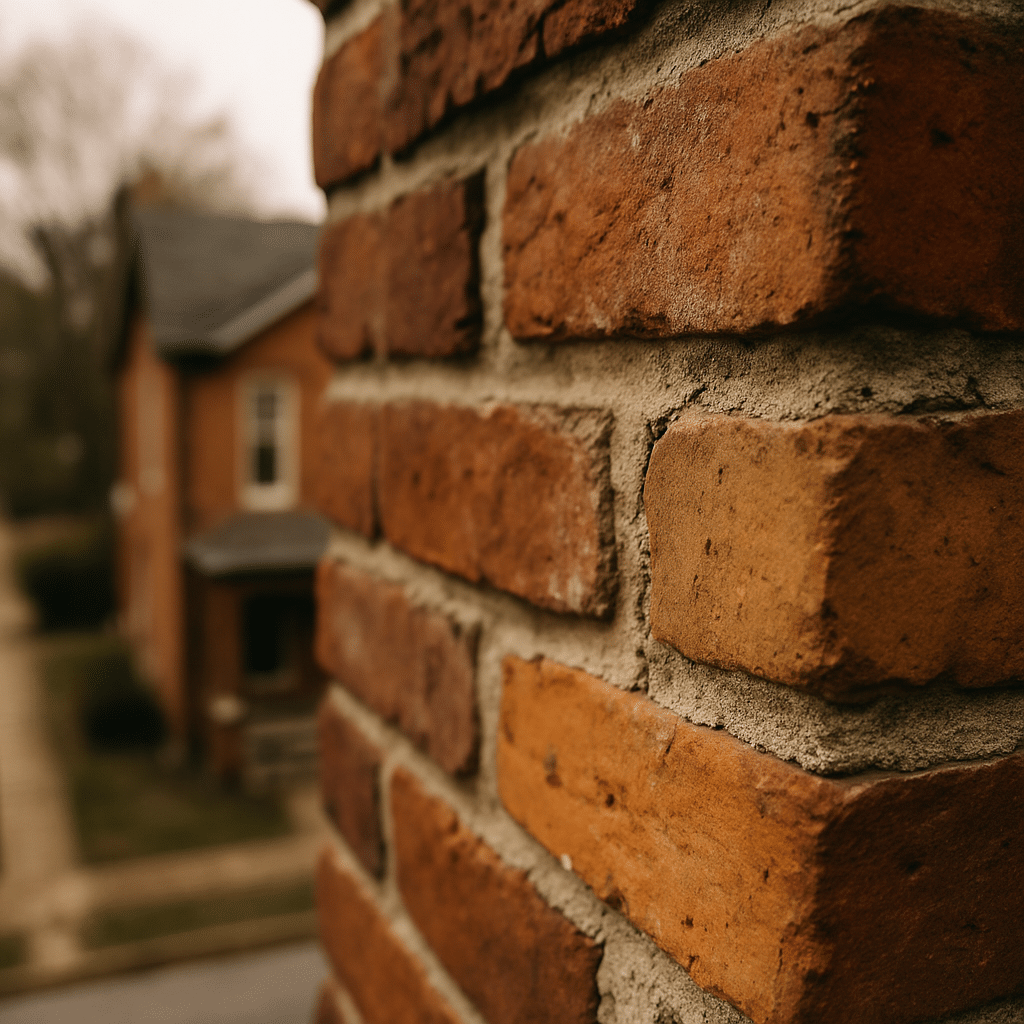
Most St. Louis homes built before 1960 used soft lime-based mortars mixed on-site to recipes that no longer exist in any catalog. Modern pre-mixed mortars are harder, denser, and more rigid. Using the wrong mortar accelerates brick deterioration, not slows it.
Learn more about creosote removal St. Louis →
Learn more about chimney storm damage repair in Clayton, MO →
Learn more about commercial boiler flue cleaning in St. Louis, MO →
The reason is straightforward physics. Brick and mortar must flex together through freeze-thaw cycles. St. Louis averages roughly 40 freeze-thaw events per winter. When the mortar is harder than the brick, the brick cracks instead of the joint, and a repointing job turns into a full brick replacement within a decade.
Historic mortar matching starts with lab analysis or close field analysis of your existing joints. A technician samples the original material, identifies the lime-to-sand ratio and aggregate color, then formulates a custom mix. This process typically adds one to two days to the job timeline before any trowel touches the wall.
EBS Chimney handles this work in-house. No subcontractors, no hand-off. The same technician who analyzes the mortar mixes and places it. That matters because color consistency and joint profile depend on muscle memory, not a specification sheet.
For commercial and HOA properties with multiple structures, see our commercial historic masonry restoration service, which covers large-scale mortar matching across multiple chimneys or facades.
40+
Freeze-thaw cycles per St. Louis winter that stress historic mortar joints
1-2
Days of analysis and custom formulation before any masonry work begins
The National Park Service Preservation Brief No. 2 recommends mortar softer than the masonry units it bonds. Using harder modern mortar on soft historic brick is a recognized cause of accelerated spalling.
The National Center for Preservation Technology and Training publishes technical notes on lime mortar formulations for masonry conservation professionals.
Real Cost Ranges for Historic Mortar Matching
Prices vary with chimney height, joint depth, linear footage, and mortar complexity. These ranges reflect typical St. Louis residential jobs.
$600 - $1,400
Chimney base to roofline, simple joint profile
- ✓ Field analysis of existing mortar
- ✓ Custom lime-sand mix formulation
- ✓ Joint tooling to match original profile
- ✓ Single-face or two-face chimney stack
$1,400 - $3,200
Full chimney, multi-face, minor spalling present
- ✓ Mortar sample with lab color match
- ✓ Selective brick stabilization
- ✓ Full four-side chimney repointing
- ✓ Crown inspection included
- ✓ Documentation for historic record
$3,200+
Pre-1920 construction, severe deterioration, tall stacks
- ✓ Full mortar analysis with aggregate ID
- ✓ Scaffold or lift equipment
- ✓ Structural brick replacement
- ✓ Multi-day project timeline
What Drives the Price Up
The Process, Step by Step
-
01
Site visit and mortar samplingA technician collects a small mortar sample from an undisturbed joint, typically from a sheltered area to avoid weathered surface contamination. Takes 30-45 minutes on-site.
-
02
Mortar analysis and mix formulationThe sample is examined for lime content, aggregate type, color, and particle size. A custom batch is mixed and test-cured. Color match is confirmed before the job starts.
-
03
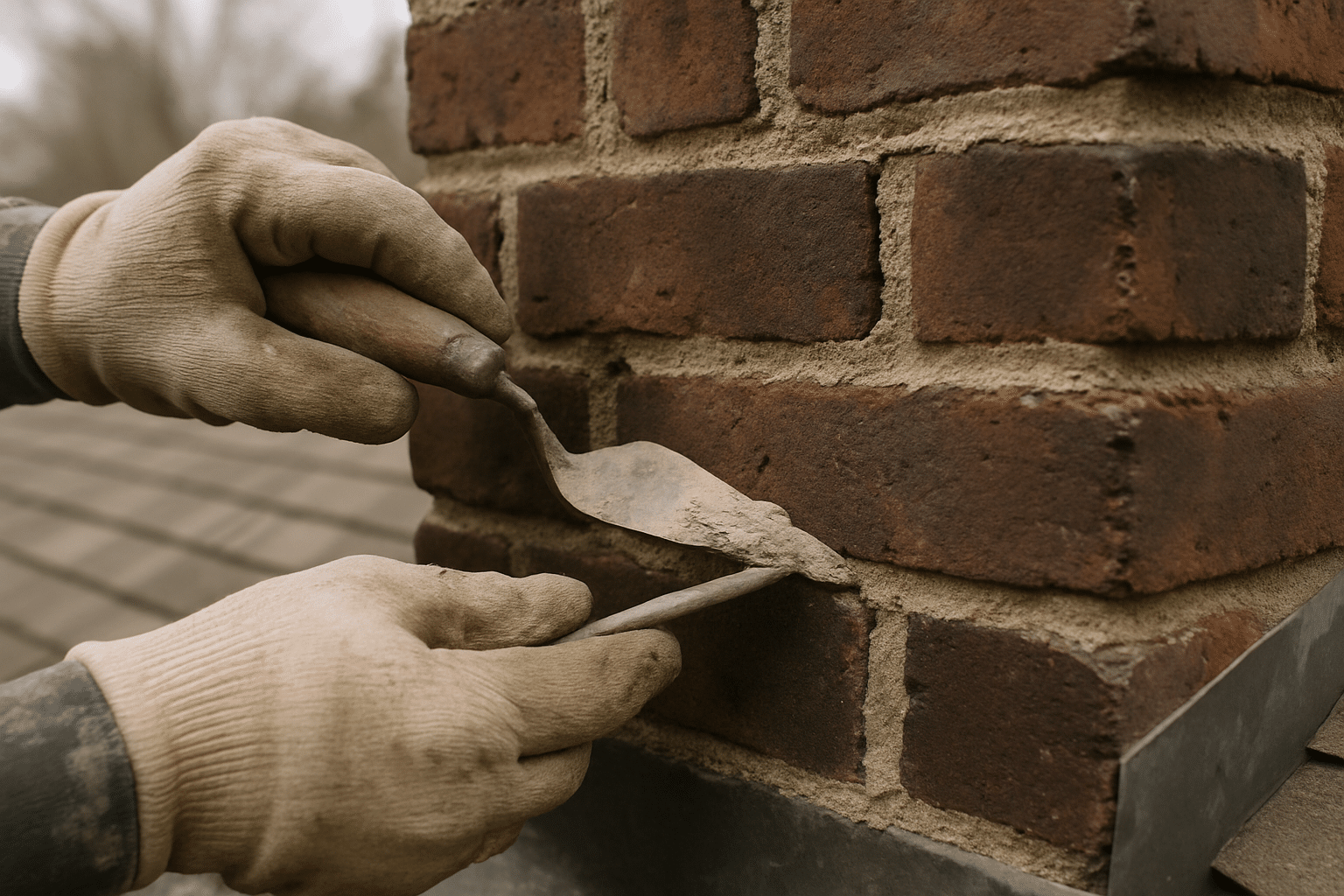
Joint preparationDeteriorated mortar is removed to a minimum 3/4 inch depth using an oscillating tool or hand chisel. No angle grinders on historic brick. Grinders widen the joint and damage brick edges permanently.
-
04
Repointing and joint toolingNew mortar is applied in lifts, not in a single pass, and tooled to match the original joint profile. Flush, weathered, or rodded profiles each require a different technique. Most chimneys take one full day.
-
05
Cure and inspectionLime mortars cure slowly. Full hardness takes 28 days. We protect fresh joints from rain for the first 72 hours and do a final visual inspection before closing the job.
Related Work You May Need at the Same Time
Historic mortar work often uncovers adjacent issues. Bundling these during the same mobilization saves a second setup charge.
- ●Historic chimney tuckpointing - when the chimney stack joints need full-depth restoration beyond spot repointing
- ●Emergency spalling brick repair - when face-spalled bricks need replacement alongside the mortar work
- ●Efflorescence diagnosis - white salt staining often signals water infiltration through failed joints
- ●Chimney crown rebuilding - a cracked crown accelerates joint deterioration and should be repaired in the same visit
- ●Advanced leak diagnostics - if water is already inside the flue, the source must be confirmed before repointing seals in any moisture
The Cost of Getting Mortar Wrong on Historic Brick
A standard portland cement repoint on soft historic brick typically fails within 5-8 years in a St. Louis climate. The rigid joint traps water against the brick face instead of allowing it to migrate through the joint. Spalling follows.
Replacing a spalled brick costs $30-$80 per unit in labor and material, not counting the difficulty of sourcing matching antique brick. Multiply that across a chimney face and the math makes correct mortar matching the cheaper option by a wide margin.
5-8
Years before wrong mortar fails in St. Louis freeze-thaw conditions
$80
Per spalled brick for replacement labor and material
72h
Critical rain protection window after lime mortar placement
28
Days for full lime mortar cure and hardness
How to Spot Bad Mortar Before It Gets Worse
- ✓ Mortar crumbles or can be scratched out with a key
- ✓ Visible gaps wider than 1/4 inch at joint faces
- ✓ White salt deposits (efflorescence) on the chimney face
- ✓ Brick faces chipping or delaminating in sheets
- ✓ Water staining on interior wall below chimney
When to Act Immediately
Some mortar deterioration is cosmetic. Some is not. Act immediately if you see:
- ◆ Loose or displaced bricks in the stack
- ◆ Leaning or bulging chimney section
- ◆ Water entering the firebox during rain
- ◆ Visible daylight through exterior mortar joints
Call (314) 931-4541 for 24/7 emergency response.
HOA and Commercial Properties
Properties with multiple chimneys benefit from scheduled mortar inspections and phased restoration contracts. EBS Chimney provides documentation packages for historic designation compliance.
View HOA and Commercial Services →Questions About Historic Mortar Costs
These are the questions EBS Chimney gets most often before a job starts. Straight answers, no hedging.
Can I just use regular mortar from a hardware store?
Standard Type S or Type N portland-based mortar is too hard for most pre-1950 brick. The compressive strength of modern mortar often exceeds the brick itself. On soft historic units, that mismatch puts all the stress on the brick face rather than the joint. You will see spalling within a few winters. The NPS repointing guide covers this failure mode in detail.
How long does historic repointing actually last?
A correctly matched lime mortar repoint typically lasts 30-50 years on a well-maintained chimney. That assumes the crown is intact, the flashing is watertight, and the chimney cap is doing its job. If any of those fail first, water re-infiltrates and the mortar deteriorates faster regardless of the mix quality.
Does my chimney qualify as historic? How do I know?
For mortar matching purposes, any chimney built before roughly 1960 is likely to have lime-based mortar rather than portland cement. You do not need a formal historic designation. The practical test is whether the existing mortar is soft enough to be scratched by a steel nail. If it scratches easily, it is lime-based and requires a matched mix. Formal historic designation (National Register, local landmark) adds documentation requirements but does not change the mortar science.
Is the mortar analysis included in the estimate or billed separately?
EBS Chimney includes field mortar analysis in the job cost when we perform the repointing. We do not charge a separate diagnostic fee for the analysis when the repointing work is booked with us. If you need analysis only for a preservation report without associated work, that is a separate engagement. Call (314) 931-4541 to discuss your specific situation.
Can I spot-treat deteriorated sections or do I need the whole chimney done?
Spot repointing is a legitimate option when deterioration is localized. The key constraint is visual match. Even with careful formulation, fresh mortar on an old chimney will look lighter than cured surroundings for 6-12 months. If visual consistency matters (street-facing facade, historic district review), whole-face repointing produces a more uniform appearance. For a purely structural repair on a non-visible face, spot treatment is practical and cost-effective.
What about parging or waterproof coatings over old mortar?
Parging and elastomeric coatings applied over deteriorated joints trap moisture behind a sealed surface. In a freeze-thaw climate like St. Louis, that trapped water expands and drives bricks off the face from behind. EBS Chimney does not apply coatings over failed mortar joints. The joint must be repointed first. A breathable water repellent applied after repointing is a different matter and is sometimes appropriate.
In-House Work. No Subcontractors. Traceable Results.
Every mortar matching job at EBS Chimney is performed by a trained, in-house technician. No labor brokers, no day-rate workers unfamiliar with lime mortar behavior. That matters because mortar placement is not mechanical. The technician needs to read moisture conditions, ambient temperature, and brick absorption rate in real time and adjust accordingly.
Cold weather below 40 degrees Fahrenheit requires heated enclosures and extended protection. Hot, dry conditions above 90 degrees require misting schedules to slow cure. These are judgment calls made on the job, not covered by a specification sheet.
EBS Chimney uses data-driven diagnostics before any physical work begins. That includes thermal imaging on suspect areas and water intrusion mapping when the chimney has an active leak. Repointing over an undiagnosed leak does not fix the leak. It buries it.
Our service area covers the St. Louis metro region. For properties outside the immediate area or for large-scale commercial projects, see our commercial historic masonry restoration page. For general chimney diagnostics questions, the chimney diagnostics FAQ hub covers a wide range of issues.
Get a Specific Number for Your Chimney.
Estimates are free. A technician visits, assesses the mortar condition, measures the work area, and gives you a written scope with pricing before any work is authorized.
For active structural emergencies (loose bricks, visible gaps, water already inside), call directly. EBS Chimney provides 24/7 emergency response across the St. Louis metro area.
EBS Chimney serves the St. Louis metropolitan area. 24/7 emergency availability. Free estimates on historic mortar matching and all masonry services.
Historic Tuckpointing
Full-depth joint restoration on pre-1960 masonry with matched lime mortar.
Learn more →Emergency Spalling Brick Repair
Urgent structural stabilization when brick faces are actively separating.
Learn more →Commercial Masonry Restoration
Multi-chimney contracts for HOAs and commercial building owners.
Learn more →Advanced Leak Diagnostics
Identify the actual source before repointing seals in hidden moisture.
Learn more →